

Most people assume social media is a time sink. Scroll, compare, feel worse, repeat. But that framing misses something real. The reasons why join social platforms matter go far deeper than selfies and trending sounds. Social platforms are where young adults today build friendships across borders, find communities that actually get them, discover who they are, and share what they create. This article breaks down the genuine, research-backed benefits of joining social platforms so you can make informed choices about how you show up online.
Table of Contents
- Key takeaways
- Why join social platforms: the psychology behind the pull
- Real advantages of joining social networks
- Active vs. passive use: what actually makes the difference
- Building your presence and finding your community
- My take on what social platforms actually give you
- Share your story on Eu
- FAQ
Key takeaways
| Point | Details |
|---|---|
| Social platforms meet real needs | Platforms fulfill psychological needs like belonging and recognition, making them genuinely rewarding spaces. |
| Active use beats passive scrolling | Posting and commenting links to better well-being, while passive scrolling links to loneliness. |
| Identity and learning happen here | Young adults use social platforms to explore who they are and access knowledge they cannot find elsewhere. |
| Niche communities offer real belonging | Joining interest-based groups connects you with people who share your values and experiences. |
| Intentional use changes everything | Curating your feed and engaging with purpose transforms your experience from draining to energizing. |
Why join social platforms: the psychology behind the pull
Before you decide whether social media is worth your time, it helps to understand why it feels so compelling in the first place. It is not a design flaw or a weakness. According to research, social media taps deep psychological needs for belonging, recognition, autonomy, and meaning. These are the same needs humans have always had. Social platforms just happen to meet them at scale and on demand.
When someone likes your photo or replies to your comment, that response is not trivial. It functions as a real social signal, similar to a nod of acknowledgment in a physical room. The brain processes it as meaningful feedback. Platforms also use a variable reward system, where you never quite know when the next positive response will arrive. That unpredictability creates a behavioral learning loop that keeps you coming back. Knowing this puts you in control of it.
Here is what social platforms specifically activate for you:
- Belonging: You find people who share your interests, background, or humor
- Recognition: Your posts, opinions, and creativity receive feedback and acknowledgment
- Autonomy: You choose what to share, when, and with whom
- Competence: You learn, improve, and develop skills within communities
- Meaning: You connect your experiences to a larger story or group identity
Pro Tip: When you notice yourself scrolling without purpose, pause and ask what need you are actually trying to meet. Name it, then find a specific action that meets it better, like posting something instead of browsing.
That said, balance matters. A 2025 study found that a one-week social media break reduced anxiety by 16.1% and depression symptoms by 24.8%. The takeaway is not to quit. It is to engage with intention.
Real advantages of joining social networks
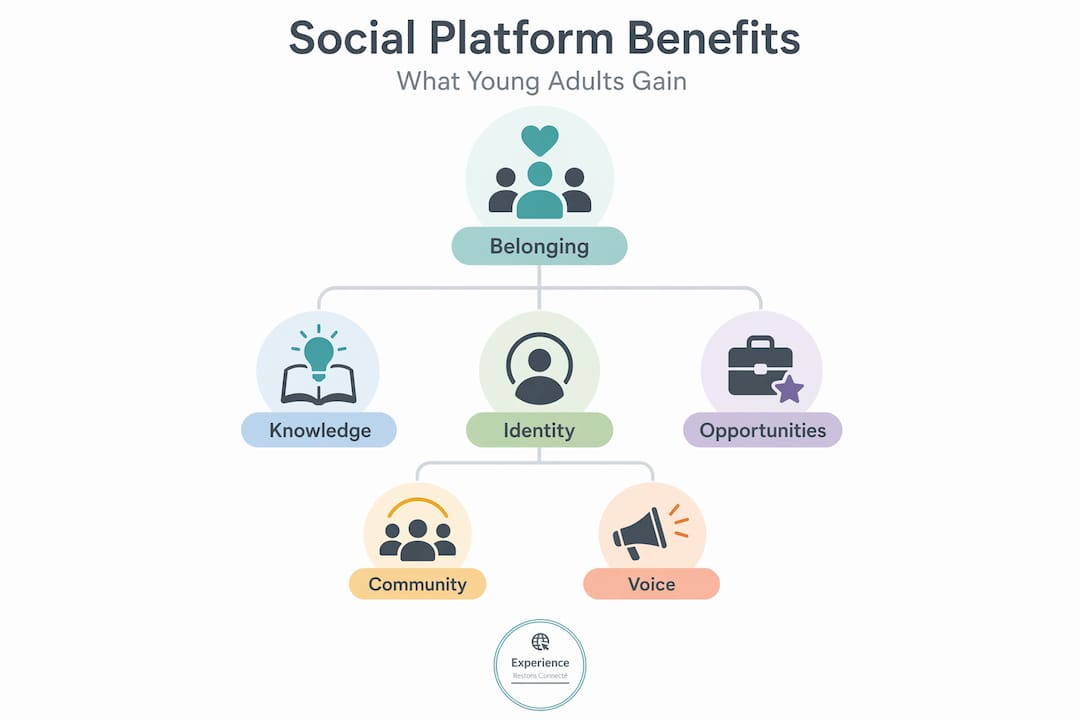
The advantages of joining social networks go well beyond staying in touch. Here are the four core benefits young adults consistently gain from social platforms when they use them well.
-
Staying connected with people you care about. Surveys show that 81% of adults say social media helps them maintain relationships, and 68% report feeling more connected to their communities. Distance no longer severs friendships. You can stay close to a friend who moved abroad, reconnect with family, or maintain a relationship with a mentor who lives across the country.
-
Learning things you would not find in a classroom. Roughly 47% of girls ages 13 to 15 use social media specifically to learn. You can follow experts in fields you love, watch tutorials, join live discussions, and access knowledge across languages and cultures. Social platforms have become one of the most accessible learning tools available.
-
Exploring your identity. This one surprises people. Social platforms enable self-formation by giving you a space to share who you are, receive feedback, find recognition, and connect with communities beyond your physical location. For young adults still figuring out who they are, this is not superficial. It is significant. Studies show that 71 to 72% of girls of color find identity-affirming content on social platforms at least once a month.
-
Sharing your creativity and building an online presence. Whether you post photos, write, make videos, or design, social platforms give your work an audience. You can build your online presence step by step, starting small and growing as your confidence builds. Over time, your profile becomes a portfolio, a creative space, and a record of your growth.
Pro Tip: Treat your profile as a living document of who you are and what you care about, not a highlight reel of perfection. Authenticity attracts better connections than polish does.
Active vs. passive use: what actually makes the difference
Here is something most articles skip over. The benefits of social media are not evenly distributed. They depend almost entirely on how you use platforms, not just whether you use them. Research clearly shows that active social media use, things like posting, commenting, and direct messaging, links to better mental health and greater well-being. Passive use, which means mindlessly scrolling through other people's content without interacting, links to loneliness and depression.

The difference is real, and it changes how you should approach every session. Active use puts you in the driver's seat. Passive use turns you into an audience member watching everyone else's life without participating in your own.
Practical ways to shift from passive to active:
- Post something. Share a photo, a thought, a question, or a recommendation. Contributing to the feed matters more than consuming it.
- Comment with substance. A real response to someone's content creates a connection. A like does not.
- Curate your feed deliberately. Unfollow accounts that consistently make you feel inadequate. Follow people whose content genuinely interests or inspires you. Research confirms that curating your feed around interests leads to better social experiences overall.
- Set a time boundary. Decide in advance how long you will spend on a platform per session. This prevents the open-ended scroll that drains you.
- Check your emotional state after. If you consistently feel worse after using a platform, that platform is not serving you. Adjust or move on.
Social media engagement is a skill. You get better at it by practicing intentional choices rather than defaulting to whatever the algorithm feeds you next. You can also learn how social feeds and algorithms shape what you see, which helps you work the system rather than letting it work you.
Building your presence and finding your community
Knowing the reasons to use social platforms is one thing. Knowing how to get the most out of them is another. Here is a practical comparison to help you choose where to invest your time based on what you actually want.
| Goal | Best platform type | What to do |
|---|---|---|
| Share photos and visual experiences | Image-first platforms | Post consistently, use relevant tags, engage with comments |
| Find your niche community | Group-based or interest platforms | Search for topic groups, participate in discussions |
| Learn and grow professionally | Knowledge-sharing platforms | Follow experts, save useful posts, contribute questions |
| Build a creative portfolio | Visual or video platforms | Showcase original work, respond to feedback, collaborate |
| Stay connected with friends | Multi-format social networks | Message directly, share personal updates, comment on posts |
Research shows that groups on social platforms do something genuinely powerful: they bring like-minded people together and make sharing information easier and more meaningful. Finding your community online is not about follower counts. It is about finding a group of people who share your values and showing up for them consistently.
When you choose platforms aligned with your real interests, and you engage with people in niche spaces rather than broadcasting to everyone, the join social media benefits multiply. You get real responses from real people who care about the same things you do. And over time, you build a reputation as someone worth following. For young adults, learning how social platforms help build authentic connections is one of the most transferable skills you can develop right now.
Many young adults today rely on social media as essential infrastructure for building their sense of identity. You do not have to treat it that way. But you can use it as one honest part of a bigger picture of who you are.
My take on what social platforms actually give you
I have watched a lot of people approach social media as either a trap to avoid or a game to win. Neither framing gets you very far.
What I have found, working in and around digital media for years, is that the people who get the most out of social platforms are the ones who treat them like a real community. They show up with something to contribute. They respond when people reach out. They do not obsess over metrics. They post what they actually care about and then get offline and live their life.
The biggest surprise I keep seeing? The young adults who build the most meaningful connections online are often not the loudest or most polished. They are the most consistent and the most genuine. A photo that honestly captures a real moment, shared without filters or performance, lands differently than a perfectly curated one.
The importance of social platforms for this generation is not about access to content. It is about access to people. The tools exist to connect you with someone who has been through exactly what you are going through, no matter where either of you lives. That is worth taking seriously.
Use platforms with purpose. Post what you mean. Engage with real curiosity. And step away when you need to. The platforms are there to serve you, not the other way around.
— Clère
Share your story on Eu
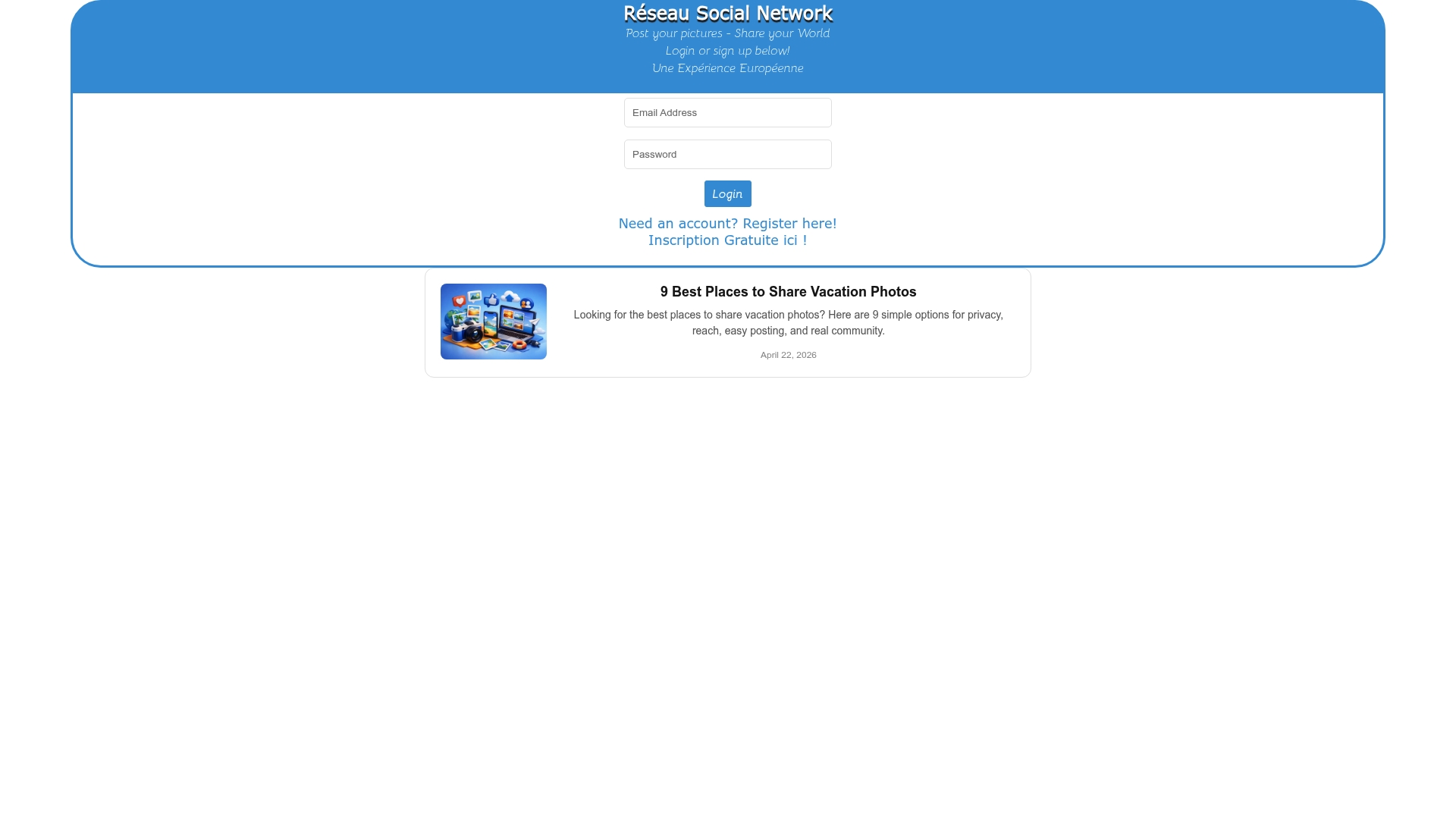
If this article has you thinking about where to start, Eu is worth a look. The Eu social network is a free, community-driven platform built around sharing personal experiences through photos. Registration is free, the interface is clean, and the focus is on real experiences rather than performance. Whether you want to document your travels, share cultural moments, or connect with others across Europe, Eu gives you a welcoming space to do it. You can also explore community management tools to grow and manage your connections as your presence builds. Sign up, post something real, and see who you meet.
FAQ
Why join social platforms if I am already happy offline?
Social platforms do not replace offline life. They extend it by letting you maintain relationships across distance, find communities built around your interests, and share experiences with people who care about the same things you do.
What are the main benefits of social media for young adults?
The core benefits include maintaining relationships, accessing knowledge, exploring your identity, building creative visibility, and finding supportive communities. Research shows 81% of adults say social platforms help them stay connected to the people and communities they care about.
How can I use social platforms without feeling drained?
Focus on active engagement rather than passive scrolling. Post, comment, and connect intentionally. Curate your feed to reflect your genuine interests, and set time limits per session to stay in control of the experience.
Is it worth joining a smaller or niche social network?
Yes. Smaller platforms often offer more meaningful interactions because the community is built around shared interests rather than mass appeal. Niche networks make it easier to be seen, heard, and genuinely connected.
How do social platforms help with identity exploration?
Social platforms provide a space to share who you are, receive feedback, and connect with others who reflect or affirm your identity. Studies show that identity-affirming content on social platforms plays a meaningful role in how young adults understand themselves.