
Social networking is far more than a habit of scrolling through endless feeds. It's a living system that lets you post photos, share experiences, and build real relationships with people who care about the same things you do. For young adults across Europe, these platforms have become one of the most powerful tools for cultural discovery and genuine human connection. Social networking is defined as the use of internet-based platforms to connect users, share content like photos and updates, and build lasting relationships. This guide breaks down how it all works and how you can get more out of it.
Table of Contents
- Defining social networking and its role in European youth culture
- Core mechanics: How social networks work behind the scenes
- Photo-sharing platforms for cultural and social expression
- Benefits and challenges of social networking for well-being and connection
- Ensuring safe and authentic use: Rules and best practices in Europe
- Why finding your European community matters more than chasing likes
- Ready to experience richer connections online?
- Frequently asked questions
Key Takeaways
| Point | Details |
|---|---|
| Nearly all young Europeans use social media | Social networking is a primary way for 16-29-year-olds in Europe to keep in touch and share experiences. |
| Algorithms shape what you see | Engagement, early activity, and authentic connections determine your feed’s visibility and reach. |
| Photo-sharing strengthens cultural ties | Using platforms like Pixelfed and BeReal supports authentic expression and safe cultural sharing. |
| Balance benefits and risks | Social networking offers connection and support but requires mindful use to avoid negative effects. |
| Know the rules and best practices | Following EU safety rules and platform guidelines ensures a safe, rewarding social networking experience. |
Defining social networking and its role in European youth culture
Social networking, at its core, is about people. It's the practice of using online platforms to connect with others, share content, and maintain relationships over time. Platforms like Instagram, Facebook, TikTok, and newer European alternatives all fit this definition. They give you a profile, a feed, and tools to interact with others through posts, comments, and shares.
What makes social networking especially relevant for young Europeans is the sheer scale of adoption. Young adults across Europe between the ages of 16 and 29 use social media at rates between 80% and 95%, with countries like Cyprus and North Macedonia reaching 93.8% and Italy and Germany sitting at 80.3% and 84.2% respectively. These are not casual users. They are actively posting, sharing, and connecting every single day.
| Country | Social media usage (16 to 29 age group) |
|---|---|
| Cyprus | 93.8% |
| North Macedonia | 93.8% |
| Germany | 84.2% |
| Italy | 80.3% |
So why do young Europeans use social networks so heavily? The top reason, reported by 50.8% of users, is to stay in touch with friends and family. Another 39% say they use platforms simply to fill time. But there's a third, often overlooked motivation: cultural discovery. Sharing a photo from a local festival in Lisbon or a street market in Krakow connects you to people who share your curiosity about life across the continent.
Here are a few key terms worth knowing as you learn how social networking works:
- Social graph: The map of connections between you and everyone you follow or are friends with
- Post: Any piece of content you share, whether a photo, video, or text update
- Following: Choosing to receive updates from another user's account
- Feed: The stream of content you see when you open an app, shaped by your connections and the platform's algorithm
Core mechanics: How social networks work behind the scenes
Now that you know what social networking means for young Europeans, it's time to peek under the hood at how these platforms actually work and why some posts go viral while others fizzle.
Every social network is built on a few core components. You create a profile that represents you. You form connections by following or friending others. Together, these connections form your social graph, a web of relationships the platform uses to decide what content to show you. When you post a photo, it enters a ranking system that determines who sees it and when.
Algorithms power this ranking through a process that involves candidate sourcing, ranking, and filtering. The platform first identifies a pool of content that might be relevant to you. It then ranks that content using machine learning models that predict how likely you are to engage with each post. Finally, it filters out content that violates rules or that you've indicated you don't want to see.
What does the algorithm actually reward? Here's a comparison of the main factors:
| Factor | What it means | Why it matters |
|---|---|---|
| Engagement | Replies, likes, shares, saves | Replies carry more weight than simple likes |
| Relevance | How closely content matches your interests | Based on your past behavior and connections |
| Velocity | How fast a post gets engagement | First 30 to 60 minutes are critical |
| Penalties | Spam signals, low credibility, high follow ratios | Can suppress even good content |
The velocity factor surprises a lot of people. If your post doesn't get traction quickly after you publish it, the algorithm may stop pushing it to new audiences entirely. This is why timing your posts when your audience is most active makes a real difference.
There are also behaviors that actively hurt your reach. Following too many accounts too quickly, posting repetitive content, or getting flagged for spam patterns can all reduce your visibility. Platforms watch for accounts that follow more than 0.6 times their follower count once they exceed 500 follows.
Pro Tip: Consistent, genuine interactions with your existing followers matter more than posting at high volume. Comment on others' photos, reply to comments on your own posts, and engage with content in your niche. This signals to the algorithm that you're a real, active member of the community. For more ideas on keeping your audience engaged, check out boosting engagement with content ideas.
Photo-sharing platforms for cultural and social expression
Understanding algorithms and engagement, let's focus on the photo-sharing platforms powering cultural connection and creativity for Europe's youth.

Instagram remains the dominant photo-sharing platform globally, but it's not the only option. A growing number of European alternatives are gaining traction, especially among users who prioritize privacy, authenticity, and local cultural identity. European photo-sharing alternatives include Pixelfed, BeReal, and Vernissage, each with a distinct focus.
| Platform | Origin | Key feature | Best for |
|---|---|---|---|
| USA | Broad reach, reels, stories | Large audience, brand building | |
| Pixelfed | Open source | Federated, privacy-focused | Community sharing without tracking |
| BeReal | France | Daily authentic photo prompts | Genuine, unfiltered moments |
| Vernissage | Europe | ActivityPub, photography-focused | Serious photographers and art lovers |
Pixelfed operates on a federated model, meaning no single company owns your data or controls your feed. BeReal, founded in France, sends you a daily notification to capture a photo in the moment, front and back camera simultaneously, with no filters allowed. This design actively fights the curated, perfection-focused culture that dominates Instagram. Vernissage is built on ActivityPub, the same open protocol used by Mastodon, making it part of a broader decentralized social web.
Here's how to safely share and connect using any of these platforms:
- Set up your profile fully. Use a real photo and a clear bio that reflects who you are and what you share.
- Choose your privacy settings first. Decide whether your account is public or private before you start posting.
- Start with your existing community. Follow people you already know before reaching out to strangers.
- Post consistently but intentionally. Quality over quantity always wins with algorithms and real audiences alike.
- Use location and cultural tags. Tagging your city or region helps you connect with nearby users who share your interests.
- Report and block without hesitation. Every platform has tools to protect you. Use them when needed.
Pro Tip: Use local-only visibility settings when they're available. Some platforms let you share content only with users in your region, which creates a more genuine community feel and reduces the noise of global feeds.
Benefits and challenges of social networking for well-being and connection
Now that you know where and how to share, consider the double-edged sword: social networking's benefits and risks for your well-being and relationships.
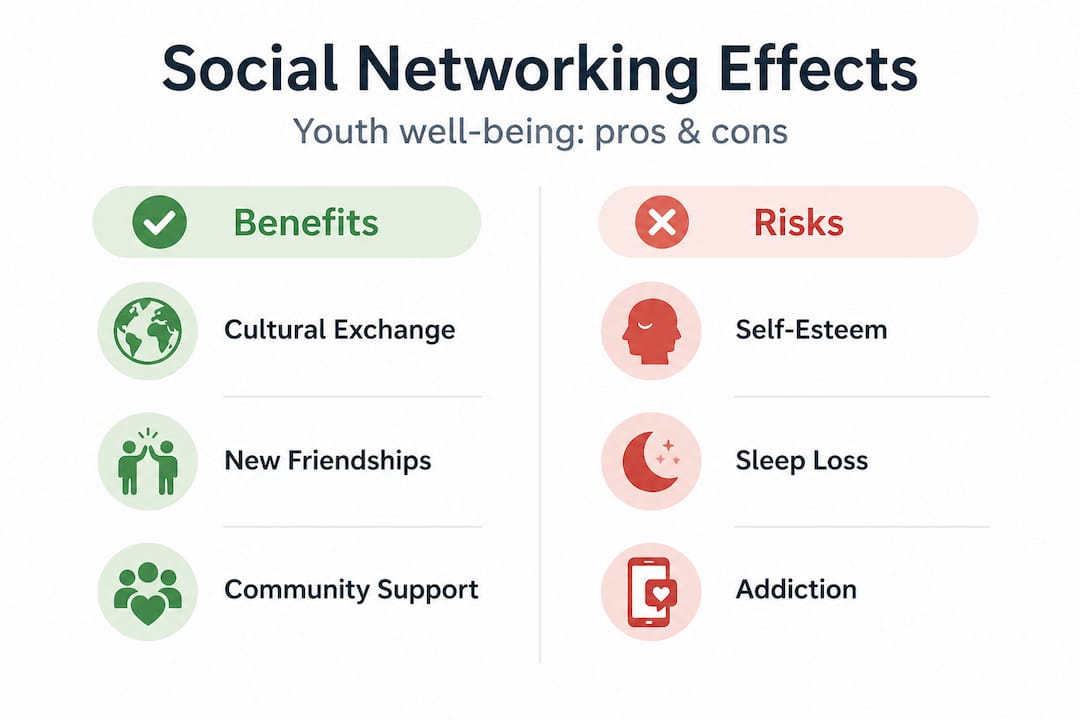
The benefits are real and well-documented. Social networks help you stay connected with friends across borders, discover new cultures, find support communities, and share creative work with an audience that cares. For young Europeans especially, these platforms bridge geographic and language gaps in ways that previous generations never had access to.
But the challenges are equally real. Research on social networking impacts shows that 60% of young users experience negative effects on their well-being and self-esteem. Social networking addiction is directly linked to lower self-esteem, and the relationship between social support and posting behavior is circular: the more support you receive, the more you post, and vice versa.
"60% of young people report unified negative effects on well-being and self-esteem from social networking, with addiction patterns closely tied to reduced self-worth."
Here's a clear breakdown of what the research shows:
Key benefits:
- Staying connected with friends and family across distances
- Finding communities built around shared cultural interests
- Accessing emotional support during difficult times
- Discovering new music, art, food, and travel experiences
Key challenges:
- Dependency and poor sleep linked to heavy platform use
- Negative body image, particularly among young women on Instagram and TikTok
- Reduced self-esteem from comparison with curated, idealized content
- Anxiety from social pressure to post, respond, and maintain an online presence
Platforms like TikTok and Instagram are associated with stronger negative effects than messaging-focused apps like WhatsApp or Snapchat. The difference lies in how these platforms are designed: broadcast-style feeds encourage comparison, while messaging apps support more private, reciprocal connections.
Pro Tip: Set a daily time limit for social networking apps and stick to it. Prioritize platforms and communities where you feel genuinely supported, not just observed. If a platform consistently makes you feel worse about yourself, it's okay to take a break or switch to something that fits your values better.
Ensuring safe and authentic use: Rules and best practices in Europe
Finally, let's make sure your social networking journey is both safe and impactful, by mastering the European rules and best practices.
The European Union has introduced some of the world's most protective rules around social media use for young people. EU age verification rules now require platforms to verify the ages of users, with most platforms restricting access for anyone under 15 or 16. These restrictions are enforced through dedicated apps and verification systems that platforms must integrate to comply with EU law.
Beyond age verification, EU regulations require platforms to provide clear reporting mechanisms, use AI moderation to catch harmful content, and give users meaningful control over their data. These protections are stronger in Europe than in most other regions of the world, which is one reason European alternatives to American platforms are gaining ground.
Here's how to keep your profile safe, authentic, and respected by platform algorithms:
- Use your real age and accurate information during registration. Platforms check for inconsistencies, and mismatched data can trigger account restrictions.
- Read the community guidelines before you post. Every platform has rules, and breaking them, even accidentally, can suppress your account.
- Avoid following large numbers of accounts in a short time. This pattern triggers spam detection systems, especially on new accounts.
- Post original content. Reposting or copying content from others without credit can flag your account for intellectual property issues.
- Enable two-factor authentication. This simple step protects your account from unauthorized access.
- Review your tagged photos and posts regularly. Make sure content others tag you in reflects how you want to be seen online.
Pro Tip: New accounts under 30 days old are watched especially closely by platform algorithms. During this period, focus on authentic engagement rather than rapid growth. Build your presence slowly and genuinely, and the algorithm will reward you over time.
Why finding your European community matters more than chasing likes
Here's a perspective that most social networking guides won't give you: the metrics you can see, likes, follows, reach, are often the least meaningful measure of what social networking can do for you.
Young Europeans have access to a genuinely unique social landscape. You're part of a continent with dozens of languages, hundreds of distinct cultural traditions, and a shared digital space that makes all of it discoverable. That's not something to waste chasing generic popularity.
Optimizing your social presence matters, but the goal should be building a community that reflects your actual interests and cultural identity, not one that looks impressive on paper. A small, engaged group of followers who genuinely connect with your photos of local markets, architecture, or food will give you far more value than thousands of passive followers who scroll past your posts.
European platforms like Pixelfed are designed around this philosophy. They remove the follower count pressure and replace it with community-focused sharing. That design choice isn't accidental. It reflects a different set of values about what social networking should be.
The long-term payoff of genuine connection is also measurable. Users who build authentic communities report higher satisfaction, stronger real-world friendships, and more creative confidence. Compare that to users who chase algorithmic reach: many report burnout, anxiety, and a growing disconnect between their online presence and their real lives.
If you want to use social media for sustainable growth, focus on what makes your perspective unique. Share the experiences that matter to you. Connect with people who respond to that authenticity. That's the approach that lasts.
Ready to experience richer connections online?
If you're ready to take your photo-sharing and social networking beyond simple engagement, here's where to find your community.
Joining a platform built for genuine cultural connection changes the experience entirely. Instead of competing for attention in a global feed, you can share your photos with people who are genuinely interested in European culture, local experiences, and real stories.
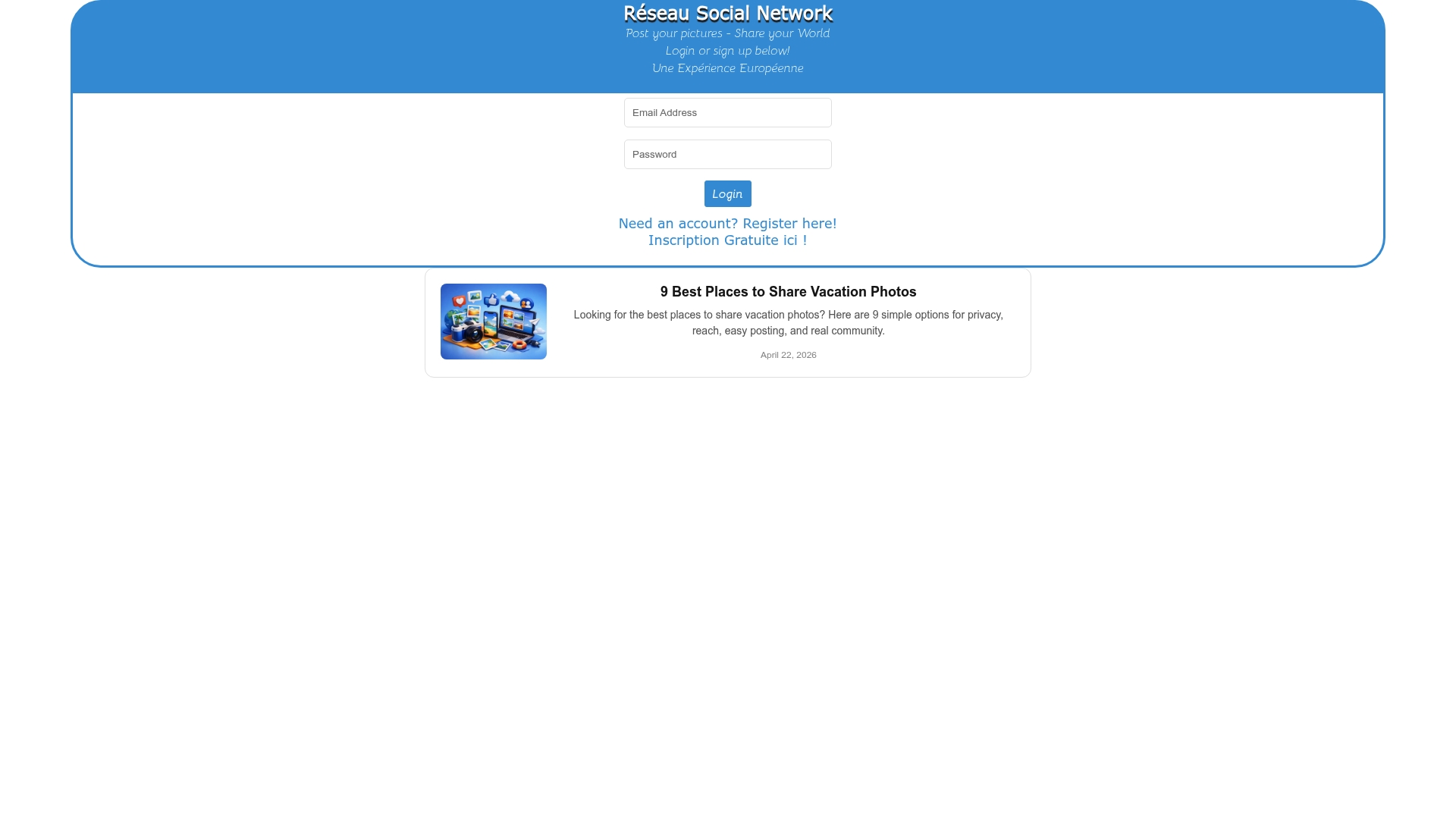
At experience.eu.com, you can find your European social network and start sharing your experiences with a community that values authenticity. Registration is free, and the platform is designed to make connecting simple and welcoming. Whether you're sharing travel photos, local events, or everyday cultural moments, you'll find people who want to see them. Explore our full platform and take your first step toward more meaningful social connections today.
Frequently asked questions
What is the main purpose of social networking?
The main purpose is to connect people, let them share updates and photos, and build relationships online. Social networking platforms provide the tools to do this at scale, across distances and borders.
Are there safe social photo-sharing options for young Europeans?
Yes. European platforms like Pixelfed, BeReal, and Vernissage offer privacy-focused, youth-friendly features that align with EU data protection standards.
How do algorithms affect what I see on social media?
Algorithms track your engagement, interests, and activity to decide what appears in your feed. Early engagement velocity in the first 30 to 60 minutes after posting is especially important for reach.
What are the risks of social networking for young people?
Risks include negative well-being effects on self-esteem, addiction, poor sleep, and body image concerns, though social networks can also provide genuine support and new friendships when used thoughtfully.
What age rules apply to social media in Europe?
Most European platforms require users to be at least 15 or 16, with EU age verification systems now in place to enforce these rules and protect younger teens from harmful content.