

You scroll through LinkedIn, Instagram, or a portfolio site and feel like everyone else has it figured out except you. That feeling is more common than you think. Many young adults across Europe struggle to get noticed online, make the right connections, or present themselves in a way that feels both authentic and professional. The good news? Building a strong, trustworthy online presence is a learnable skill. This guide gives you a clear, practical system to follow, from auditing what already exists to growing real engagement, all while staying aligned with European privacy standards.
Table of Contents
- Assess your current digital footprint
- Set clear goals and choose your platforms
- Craft and optimize your profiles
- Build credibility through content and engagement
- Monitor, adapt, and protect your online presence
- What most young Europeans miss about online presence
- Take your online presence to the next level
- Frequently asked questions
Key Takeaways
| Point | Details |
|---|---|
| Start with a self-audit | Regularly review your online footprint and privacy settings to avoid surprises. |
| Set concrete goals | Define what you want from your online presence to focus your strategy and platform choices. |
| Optimize profiles for trust | Highlight achievements and use keywords while respecting privacy and GDPR rules. |
| Content and engagement matter | Post consistently across 3-5 pillars with a balance of helpful value and personal brand promotion. |
| Monitor and adapt over time | Track engagement, audit your visibility, and update your approach based on what works best. |
Assess your current digital footprint
Before making any improvements, you need clarity on where you stand now. Start by evaluating your digital footprint.

Your online presence already exists, whether you built it intentionally or not. Every tagged photo, old forum post, or outdated bio contributes to the first impression someone forms about you. Recruiters, potential collaborators, and even new friends will Google you before deciding to connect. What they find matters enormously.
Start by searching your full name in Google, Bing, and DuckDuckGo. Look at the first two pages of results. Ask yourself: Is this information accurate? Does it reflect who I am today? Is anything outdated, embarrassing, or inconsistent with my goals? Write down everything you find, good and bad.
Here is what to look for during your audit:
- Old social profiles you forgot about (MySpace, Tumblr, early Facebook posts)
- Photos or content tagged by others without your permission
- Inconsistent names, job titles, or profile photos across platforms
- Any public personal data like phone numbers or home addresses
- Negative content or comments that could damage your credibility
As part of a solid branding strategy, data minimization is not just a legal concept. It is a personal brand principle. The European GDPR framework gives you the right to request removal of outdated or irrelevant data about yourself. Use it. Platforms like Google have a "Results about you" tool that helps flag personal information appearing in search results.
"Review and restrict public visibility of sensitive info; use privacy settings; Google yourself regularly. Data minimization aligns with personal branding." — EURES, European Commission
Pro Tip: Set a recurring monthly calendar reminder to Google yourself. Catching problems early is far easier than managing a reputation crisis later.
Go through every active platform and tighten your privacy settings. On Facebook, restrict old posts. On Instagram, decide what is public versus private. On LinkedIn, control who sees your connections and activity feed. These small actions protect you and signal that you take your personal brand seriously.
Set clear goals and choose your platforms
With a clear idea of your digital footprint, the next step is to define what you want to achieve and where.
Not every platform serves the same purpose. Spreading yourself thin across six networks without a strategy leads to burnout and weak results. Instead, pick two or three platforms that directly support your goals and commit to them fully.
Start by writing down your top three personal brand goals. Examples include:
- Landing a job or internship in your field
- Building a network of creative or professional peers across Europe
- Growing an audience around a topic you are passionate about
- Connecting with people who share your cultural interests or travel experiences
Once your goals are clear, match them to the right channels. Cultural connections online often start with visually rich platforms where shared experiences spark conversations. For career goals, LinkedIn is the priority for professional branding among young EU adults. For creative or lifestyle goals, Instagram and photo-sharing communities deliver stronger results.
Here is a quick comparison of the top platforms for personal branding in Europe:
| Platform | Best for | Pros | Cons |
|---|---|---|---|
| Career and networking | High recruiter visibility, professional credibility | Less casual, requires consistent professional tone | |
| Visual storytelling, lifestyle | High engagement potential, strong visual culture | Algorithm-dependent, requires quality visuals | |
| experience.eu.com | European social experiences | Niche community, cultural focus, free to join | Smaller reach than global networks |
| Personal website | Portfolio and authority | Full control, SEO benefits, no algorithm | Requires setup time and maintenance |
| TikTok | Video content and reach | Massive organic reach potential | Time-intensive, fast-changing trends |
Choosing the right mix depends on your goals. A design student in Berlin might combine LinkedIn for job applications, Instagram for showcasing work, and a personal portfolio site for detailed case studies. A traveler connecting with Europeans across cultures might lean into photo-sharing communities and Instagram Stories. Be intentional, not scattered.
Craft and optimize your profiles
With your goals and channels defined, you are ready to upgrade your presence where it matters most: your profiles.
Your profile is your digital handshake. It takes a visitor about three seconds to decide whether to stay or leave. Every element, from your photo to your headline to your bio, needs to work together to communicate who you are and what you offer.
Follow these steps to optimize each profile:
- Choose a professional, consistent profile photo. Use the same photo (or a consistent style) across all platforms. A clear, well-lit headshot builds recognition and trust.
- Write a bio that answers "why should I care?" Lead with what you do and who you help, not just your job title. Include a specific detail that makes you memorable.
- Add keywords your audience actually searches for. Optimizing with keywords and quantifiable achievements dramatically improves how often you appear in searches on LinkedIn and Google.
- Include measurable achievements. Instead of "experienced in marketing," write "grew a student organization's social following by 300% in six months." Numbers build credibility fast.
- Link your profiles together. Your LinkedIn should point to your portfolio. Your Instagram bio should link to your most relevant content. Create a connected ecosystem.
- Review and adjust privacy settings immediately after updating. Decide which sections are public, which are visible only to connections, and which are hidden entirely.
Pro Tip: Optimize your Instagram bio by placing your most important keyword in the name field, not just the bio text. Instagram's search function indexes the name field more heavily than the description.
On privacy, the rule is simple: restrict public visibility of sensitive info by default, then open up selectively. Your phone number, exact location, and personal email should never be publicly visible. Your professional skills, achievements, and interests can be open to the world.
Build credibility through content and engagement
Excellent profiles set the stage. Now drive growth and credibility with your ongoing activity.
Posting randomly and hoping for results is one of the most common mistakes young adults make. A structured approach to content and engagement changes everything. The goal is to become a recognizable, trusted voice in your area of interest.
Follow these steps to build a content system:
- Define three to five content pillars. These are the core topics you will post about consistently. For example: European travel, career development, photography, and cultural events. Pillars keep your feed focused and attract the right audience.
- Build a simple content calendar. Plan posts one to two weeks in advance. Even posting twice a week consistently outperforms posting daily for one week and then going silent for a month.
- Apply the 80/20 rule. 80% of your content should deliver value, whether that is education, inspiration, or entertainment. Only 20% should be self-promotional.
- Engage daily, even on days you do not post. Comment on others' content, share posts you find valuable, and respond to every comment on your own posts. Daily engagement matters more than follower count.
- Track what works and double down. After four weeks, review which posts got the most interaction and create more content in that style.
Here is a reference table for engagement benchmarks across platforms:
| Platform | Good engagement rate | Post frequency target | Content type that performs |
|---|---|---|---|
| 2–5% | 3–5 times per week | Career tips, personal stories, industry insights | |
| 3–6% | 4–7 times per week | High-quality photos, Reels, Stories | |
| experience.eu.com | Community-focused | Regular sharing | Personal photos, cultural experiences |
| Personal website | N/A (traffic-based) | 1–2 blog posts per month | Long-form guides, portfolios |
Aim for a 3–5% engagement rate as your benchmark. If you are below that, focus on asking questions in your captions, responding to every comment, and posting at times when your audience is most active.
Key habits that boost your engagement over time:
- Reply to every comment within the first hour of posting
- Tag relevant people or organizations when appropriate
- Use location tags and relevant hashtags to increase discoverability
- Share behind-the-scenes content that shows your personality
These brand-building tips and Instagram engagement methods apply across platforms. The principle is the same: show up consistently, deliver value, and make real connections.
Monitor, adapt, and protect your online presence
With strong daily habits, your presence will evolve. Here is how to keep it future-proof and secure.
Building an online presence is not a one-time project. It requires regular maintenance, honest assessment, and quick responses when something goes wrong. The platforms change, algorithms shift, and your own goals evolve. Your strategy needs to keep pace.
Here is what to monitor on a regular basis:
- Engagement rate trends: Are your posts getting more or less interaction over time? A drop signals a need to refresh your content approach.
- New connections and opportunities: Track whether your network is growing in the right direction. Are you attracting the people and opportunities you set out to reach?
- Search visibility: Google yourself regularly and audit your digital footprint for consistency. Set a monthly reminder.
- Privacy setting changes: Platforms update their privacy policies frequently. After any major platform update, revisit your settings to make sure nothing has been reset or changed without your knowledge.
- Mentions and tags: Use Google Alerts for your name. This way, you know immediately when someone posts about you or tags you in content.
"Auditing your digital footprint for consistency is not optional. It is part of owning your story online." — EURES Career Guidance
Pro Tip: Create a simple spreadsheet to track your key metrics monthly. Include follower count, average engagement rate, and any notable opportunities that came through your online presence. Patterns become visible within three months.
When mistakes happen, and they will, act quickly. Delete or correct inaccurate information. Address criticism professionally and calmly. If someone posts harmful content about you, use the platform's reporting tools and, if needed, invoke your GDPR right to erasure. Staying calm and methodical protects your reputation far better than reacting emotionally.
To refine your branding over time, revisit your goals every three to six months. Ask yourself: Has my audience grown? Am I attracting the right opportunities? Is my content still aligned with who I am and where I want to go? Adjust your strategy based on real data, not guesswork.
What most young Europeans miss about online presence
Here is something most guides will not tell you: obsessing over follower counts is one of the least productive things you can do for your personal brand. Numbers feel satisfying, but they are a lagging indicator. The real drivers of a strong online presence are trust, consistency, and clarity.
Many young Europeans chase viral moments or try to copy influencers from outside their cultural context. It rarely works. What does work is showing up authentically, sharing content that reflects your genuine interests and values, and building relationships one conversation at a time. A network of 500 engaged, relevant connections will open more doors than 10,000 passive followers who never interact with you.
There is also a uniquely European angle that most social media advice ignores. Privacy is not just a legal obligation here. It is a cultural value. When you practice data minimization and protect your personal information, you are not limiting your brand. You are strengthening it. People trust profiles that feel considered and intentional. Oversharing personal details, location data, or sensitive information actually reduces credibility rather than building it.
Data minimization aligns with personal branding in a way that is specific to the European context. Sharing less, but sharing it well, is a competitive advantage. It signals maturity, self-awareness, and respect for your audience's trust.
Slow, sustainable growth also beats shortcuts every time. Buying followers, using engagement pods, or chasing trending topics outside your niche might produce a short spike. But it damages the authentic signal your profile sends to both algorithms and real humans. The branding insights that hold up over years are built on genuine value, not tricks.
Start small, stay consistent, and trust the process. Your online presence is a long-term asset. Treat it that way.
Take your online presence to the next level
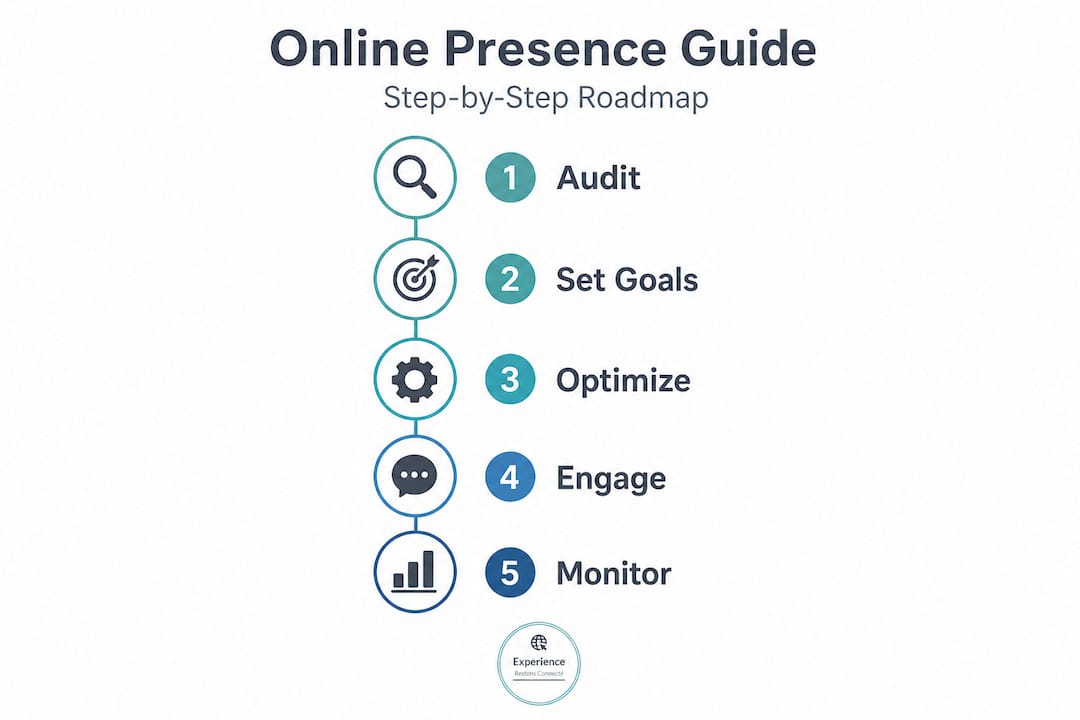
You now have a complete roadmap: audit your footprint, set clear goals, optimize your profiles, build consistent content habits, and monitor your progress over time. These steps work. But knowing what to do and actually doing it with confidence are two different things.
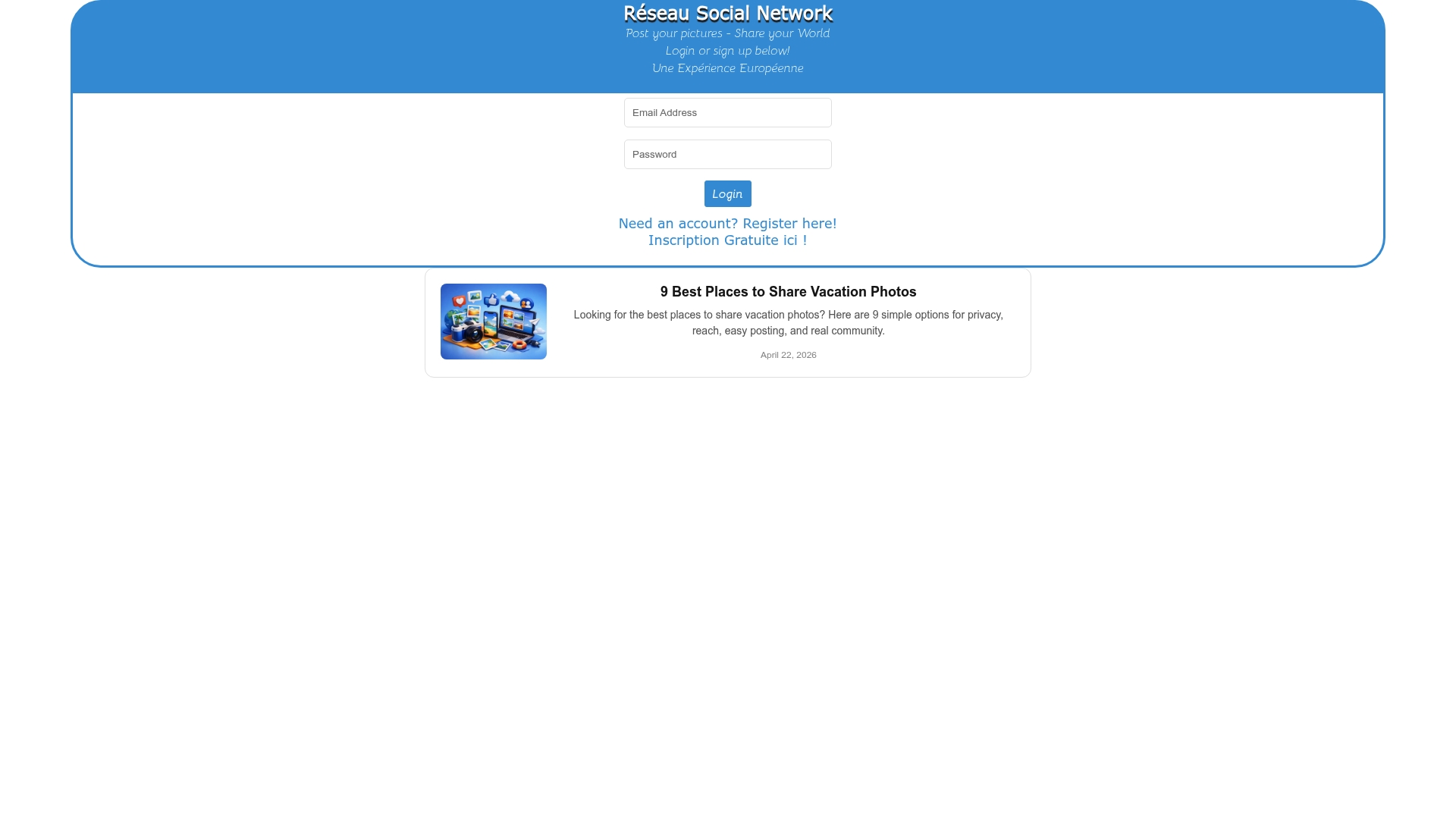
If you want hands-on support, experience.eu.com is built for exactly this kind of journey. You can start with Instagram bio optimization to sharpen how you present yourself visually, or take the next step and join The Social Network designed for young Europeans who want to share their experiences, connect with a like-minded community, and grow their presence in a space that celebrates European culture. Registration is free, the community is welcoming, and your next connection is waiting. Post your first photo, share your story, and start building the presence you deserve.
Frequently asked questions
Why is LinkedIn prioritized for building an online presence in Europe?
LinkedIn is the leading platform for career opportunities and professional networking among young adults in Europe, making it the most effective starting point for career-focused personal branding.
What privacy steps should I take because of GDPR when building my presence?
Regularly review your public profiles, tighten privacy settings on every platform, and avoid sharing sensitive personal data publicly. GDPR gives you the right to request removal of outdated or irrelevant information about yourself.
How often should I post content to grow my audience?
Consistency matters more than frequency. Post across your content pillars with an 80% value and 20% promotion split, even if that means just two or three posts per week to start.
What is a good engagement rate (ER) benchmark to track success?
A 3–5% engagement rate is a solid target for most platforms. If you fall below this, focus on asking questions, responding to comments, and posting at peak times for your audience.
How do I balance self-promotion and value when posting?
Keep 80% of your content focused on helpful, authentic, or entertaining value. Reserve the remaining 20% for sharing your own work, services, or achievements to maintain credibility without alienating your audience.