

You probably have hundreds of followers, a growing contact list, and notifications piling up every hour. But do you actually feel connected? Most people assume that more online activity equals stronger social bonds, but research shows that "social connectivity" is a catch-all term with multiple definitions and real confusion around what it even measures. This guide cuts through the noise. You'll learn what social connectivity actually means, how it's measured, why numbers alone don't tell the full story, and how you can genuinely build better connections online.
Table of Contents
- What is social connectivity? Breaking down the concept
- How researchers and platforms measure social connectivity
- Why more connections don't always mean better connectivity
- Social connectivity and young Europeans: Culture, storytelling, and impact of social media
- Practical tips: Boosting your own social connectivity online
- Perspective: Why meaningful online connection is harder and more valuable than ever
- Take your social connectivity to the next level
- Frequently asked questions
Key Takeaways
| Point | Details |
|---|---|
| Social connectivity is multifaceted | It includes subjective feelings, network size, behaviors, and relationship quality. |
| Measurement goes beyond numbers | Tools like the Social Connectedness Scale analyze both how connected you feel and what you do online. |
| Quality beats quantity | Perceived belonging and support predict well-being more than just having many contacts. |
| Culture and storytelling matter | Shared experiences and creative expression foster deeper online connections for young Europeans. |
| Apply intentional strategies | Regularly assess your relationships, prioritize supportive engagement, and join meaningful groups. |
What is social connectivity? Breaking down the concept
With the common confusion established, let's clarify what experts actually mean by social connectivity.
The term gets used constantly, but it covers very different ideas depending on who's using it. Research identifies at least four distinct ways to define social connectivity: subjective feelings of being connected, objective measures like network size, behavioral patterns like how often you interact, and synchrony, which means how in tune you feel with others around you.
That fragmentation is a real problem. When a researcher talks about "connectivity," they might mean something completely different from what a social media platform tracks. And what you feel when you scroll your feed may not match either of those definitions.
Here's a quick comparison to make this clearer:
| Type of connectivity | What it measures | Example |
|---|---|---|
| Subjective | How connected you feel | Sense of belonging in a group chat |
| Objective | Network size and contact frequency | Number of followers or weekly messages |
| Behavioral | Actions taken to connect | Commenting, sharing, attending events |
| Synchrony | Alignment and mutual understanding | Feeling "in sync" with close friends |
What this means for you practically:
- Feeling lonely despite having 2,000 followers is completely normal and well-documented.
- A small, active group of friends can provide far more genuine connectivity than a large passive audience.
- Your subjective experience of connection matters more than any number on your profile.
"Social connectivity is not a single thing. It spans feelings, behaviors, networks, and shared rhythms. Understanding which dimension you're focusing on changes everything about how you approach building it."
If you're interested in building cultural connections through shared experiences and photo sharing, you're already working on the behavioral and subjective dimensions at once. That's a powerful starting point.
How researchers and platforms measure social connectivity
Now that you understand the definition, let's look at how experts and sometimes platforms figure out if someone is truly socially connected.
Measurement is where things get both technical and surprisingly personal. Researchers use two main approaches: self-report scales and behavioral or objective metrics. Each captures a different slice of the picture.
Self-report scales ask you directly how you feel. The two most widely used tools are the Social Connectedness Instrument (SCI) and the Social Connectedness Scale (SCS). These scales measure both your subjective feelings of connection and your observable behaviors, like how often you reach out to others or participate in group activities. They're not perfect, but they give a structured way to reflect on your own social life.
Objective metrics are what most platforms track: follower counts, message frequency, post engagement, and time spent interacting. These numbers are easy to collect but can be misleading. High engagement doesn't always translate to feeling genuinely supported.
Here's how the two approaches stack up:
| Measurement approach | Strengths | Limitations |
|---|---|---|
| Self-report scales (SCI, SCS) | Captures subjective experience | Relies on honest self-reflection |
| Platform behavioral metrics | Objective and trackable | Misses emotional quality of connection |
| Mixed methods | More complete picture | Harder to implement consistently |
A practical numbered approach to measuring your own connectivity:
- Take a few minutes to reflect on how supported you feel by your online community.
- Notice whether your most active online relationships also feel the most meaningful.
- Track which types of interactions (comments, voice chats, collaborative posts) leave you feeling energized versus drained.
- Revisit your reflection monthly to spot patterns over time.
Understanding media consumption trends can also help you see how your platform habits shape your sense of connection. Platforms that encourage passive scrolling tend to reduce subjective connectivity, while those that promote active participation on social media platforms tend to improve it.
Pro Tip: Don't wait for a platform to tell you whether you're connected. Use a simple journal or note app to rate how connected you feel after different types of online interactions. Patterns will emerge quickly.
Why more connections don't always mean better connectivity
But does connecting with more people online actually lead to real connection? Let's unpack this misconception.
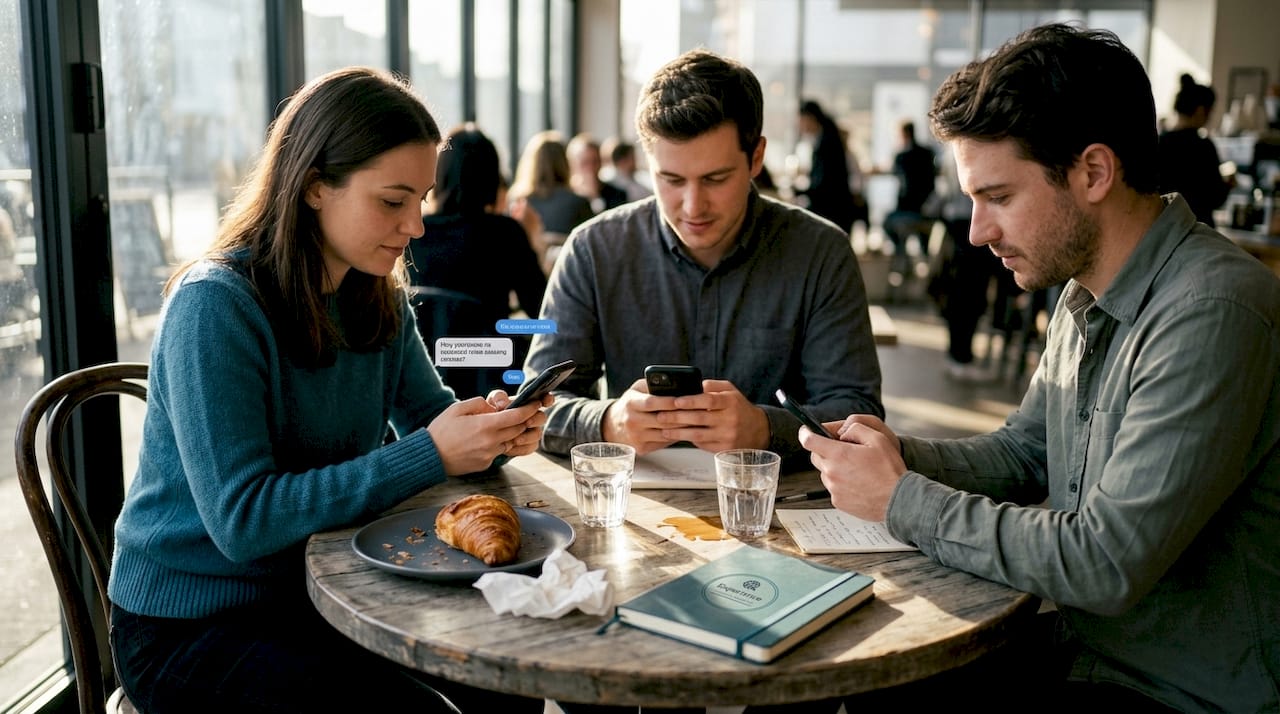
This is probably the biggest myth in social media culture. More followers, more friends, more group memberships. It sounds logical that more would equal better. But research consistently shows that having more connections online doesn't predict better well-being or genuine social connectivity. What matters far more is whether you feel a sense of belonging, support, and acceptance within those connections.
Think about it this way. You can be in 15 group chats and still feel completely alone. Meanwhile, one consistent, supportive online friendship can have a meaningful impact on your mental health and sense of belonging.
The psychological factors that actually drive genuine connectivity include:
- Perceived support: Do you feel like people in your network would show up for you?
- Sense of belonging: Do you feel like you genuinely fit into your online communities?
- Social skills and confidence: Are you comfortable initiating and sustaining conversations?
- Motivation: Do you actively want to connect, or are you just going through the motions?
- Social anxiety levels: High anxiety can block connection even when opportunities are right in front of you.
Stat to know: Studies that focus only on network size as a measure of connectivity tend to miss the psychological factors that predict actual well-being outcomes. Perceived belonging is a far stronger predictor.
Strategies that focus purely on growing your follower count often miss the mark entirely. If you're not also building trust, showing genuine interest, and creating space for real exchange, those extra connections add very little value.
You can explore social media affiliation insights to understand how to approach building online relationships with more intention. There are also solid networking guides that walk you through shifting your focus from quantity to quality.
Pro Tip: Do a quick audit of your online connections. Identify the five people you interact with most. Ask yourself honestly: do those interactions leave you feeling more connected or more drained? That answer tells you more about your social connectivity than any follower count.
Social connectivity and young Europeans: Culture, storytelling, and impact of social media
Given that network size isn't the gold standard, how are young adults actually cultivating social connectivity online, especially in Europe's diverse cultural landscape?
The numbers are striking. 89.3% of 16 to 29-year-olds in the EU actively use social networks, and many of them are doing far more than just scrolling. They're sharing personal stories, celebrating cultural traditions, collaborating on creative projects, and building communities around shared identities.
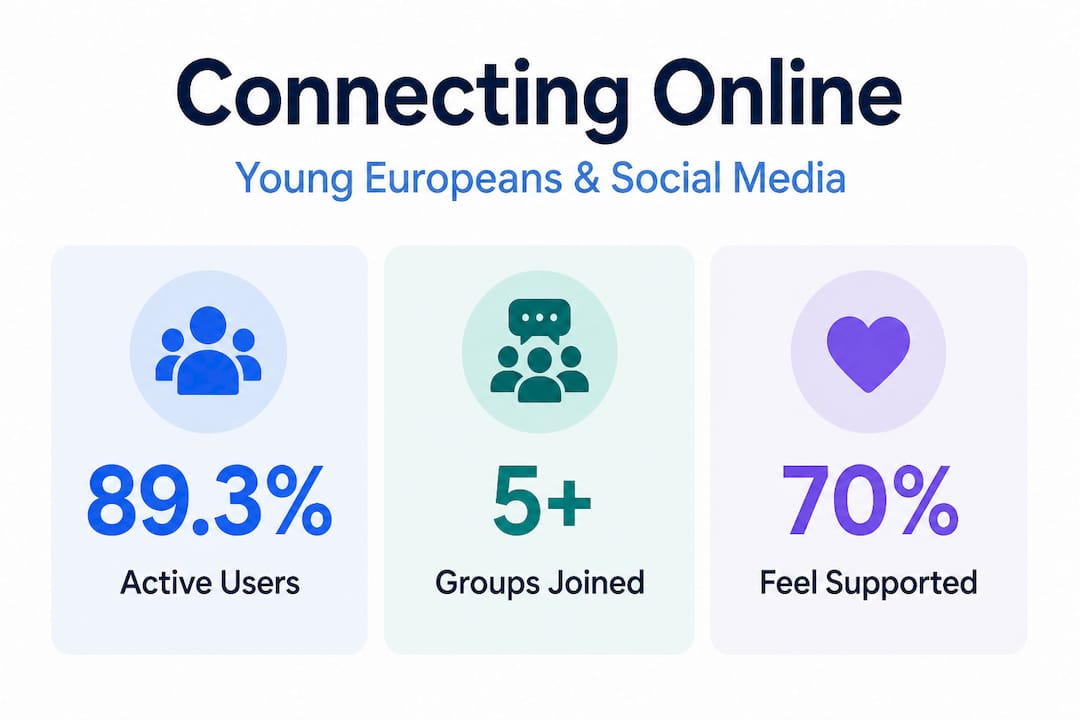
This is where social connectivity gets genuinely exciting. Europe's cultural diversity is one of its greatest strengths, and young Europeans are using social media to bridge those differences and create shared meaning across borders.
What actually works for building real connectivity in this context:
- Sharing personal stories: When you post about a local festival, a family recipe, or a neighborhood tradition, you invite others into your world. That kind of sharing creates emotional resonance.
- Participating in collaborative projects: Group challenges, creative collaborations, and community campaigns give you a shared goal. Shared goals build trust and belonging faster than individual posting.
- Expressing your cultural identity visually: Photos and videos are uniquely powerful for identity expression. They communicate things that words sometimes can't.
- Engaging with others' stories: Responding thoughtfully to what others share is just as important as what you post yourself.
Research on participatory approaches confirms that for young Europeans, building social connectivity works best when you focus on shared cultural experiences and storytelling, not just frequent posting or chasing engagement metrics.
"The young adults who reported the strongest sense of online belonging were those who shared experiences with emotional meaning, not those who posted most frequently."
Visual storytelling is one of the most effective tools available to you. A single photo that captures a genuine moment can do more for your sense of connection than a hundred generic posts.
Here's a simple framework for culturally rich storytelling online:
- Choose a moment or experience that genuinely matters to you.
- Add context: explain why it matters, what it represents, or what you felt.
- Invite response: ask a question or prompt others to share their own version.
- Engage with every reply, even briefly. That exchange is where real connectivity happens.
If you're thinking about growing your online presence in a way that feels authentic rather than performative, cultural storytelling is your strongest tool.
Practical tips: Boosting your own social connectivity online
Understanding the theory is one thing. But how can you actually apply these insights to enhance your own online experience?
The good news is that improving your social connectivity doesn't require a massive overhaul of your online life. Small, consistent changes in how you show up and interact make a significant difference over time. Effective approaches target both your perceived sense of connection and the modifiable factors that shape it, including social anxiety, communication skills, and motivation.
Here's a practical step-by-step plan:
- Self-assess first. Before changing anything, spend a week noticing how your online interactions make you feel. Which ones energize you? Which ones feel hollow?
- Practice active listening online. Read posts carefully before responding. Leave comments that show you actually engaged with the content, not just a quick emoji.
- Join groups around real interests. Find communities built around things you genuinely care about, whether that's photography, music, a city, or a cultural tradition.
- Share the "why" behind your posts. Don't just post a photo of a place. Share what it meant to you. That vulnerability invites real connection.
- Prioritize depth over breadth. Invest more time in fewer, more meaningful connections rather than spreading yourself thin across dozens of superficial ones.
- Check in regularly. Send a direct message to someone you haven't spoken to in a while. Consistency is what turns acquaintances into genuine connections.
You can also use tools available at improving your interactions to get more specific guidance on building better online communication habits.
Pro Tip: Set a small weekly goal, like leaving three genuinely thoughtful comments or sending one personal message to someone you admire online. These micro-habits compound into real relationships over time.
Perspective: Why meaningful online connection is harder and more valuable than ever
Here's something most social media advice won't tell you: platforms are not designed to make you feel deeply connected. They're designed to keep you engaged. Those two things are very different.
Algorithms reward content that generates quick reactions. That means outrage, humor, and spectacle often win over vulnerability, nuance, and genuine exchange. The result is a feed full of surface-level interaction that can actually leave you feeling less connected despite spending more time online.
Building real connectivity in this environment takes deliberate effort. It requires showing up with intention, being willing to share something that actually matters to you, and investing time in responses that go beyond a thumbs-up. That's harder than it sounds when you're competing with an infinite scroll designed to pull your attention in every direction.
But here's the flip side. When you do build genuine online connections, especially across cultural or geographic distances, the reward is extraordinary. A friendship formed through shared cultural storytelling online carries a depth that a passive follow never will. You've created something together. That shared meaning is what connectivity actually feels like.
The young Europeans who report the strongest sense of online belonging are not the ones with the biggest audiences. They're the ones who post with purpose, engage with empathy, and treat their online communities like real communities. That's the standard worth aiming for.
Take your social connectivity to the next level
You've got the knowledge. Now it's time to put it into practice and start building connections that actually feel meaningful.
Our social network community is built specifically for people who want to share real experiences, not just curated highlights. You can post photos, connect with others across Europe, and find your people through shared cultural moments. If you want to show up better online, start by learning how to optimize your Instagram bio to attract the right connections. And if you're ready to level up your content, explore our resources for creative content creation that tells your story with impact. Join free and start sharing what matters to you.
Frequently asked questions
What is the difference between social connection and social connectivity?
Social connection often refers to specific relationships or ties between people, while social connectivity is a broader concept that includes feelings of belonging, network structure, behavioral patterns, and synchrony with others.
How can I measure my own social connectivity?
You can reflect on how supported and understood you feel in your online relationships, or use structured tools like the Social Connectedness Scale to get a more structured picture of where you stand.
Does using social media more often mean I'm truly connected?
Not necessarily. Subjective belonging and perceived support matter far more than how often you post or how many contacts you have.
What's the best way to build social connectivity online as a young adult in Europe?
Focus on sharing your culture, collaborating in groups, and expressing yourself through storytelling. Cultural sharing and storytelling consistently outperform frequent posting or follower-collecting as strategies for building genuine connection.