
Not all social networks are built the same. While most platforms allow text, links, and videos, photo-based social networks are designed from the ground up around images. They change how you express yourself, how you discover other people, and how you build real community. For Europeans who want to share personal moments, local traditions, and cultural identity, these platforms offer something genuinely different. This guide breaks down how they work, why they matter in Europe, and how you can use them more intentionally.
Table of Contents
- Understanding photo-based social networking
- Types of photo-based platforms: Feed versus discovery
- Why image sharing matters in Europe
- Decentralized photo-based networks: Pixelfed and beyond
- What most social users miss about photo-based networking
- Explore and connect: Next steps for image-sharing in Europe
- Frequently asked questions
Key Takeaways
| Point | Details |
|---|---|
| Image-driven connection | Photo-based networks foster visual communication and authentic cultural sharing. |
| Feed vs. discovery models | Instagram and Pinterest differ in how users access and share photo content. |
| European popularity | Instagram and Pinterest are popular among European users for sharing experiences. |
| Decentralized options | Platforms like Pixelfed offer privacy and control beyond mainstream networks. |
| Building a photo-based presence | Understanding platform types helps users share personal and cultural moments effectively. |
Understanding photo-based social networking
Let's start with the basics. Photo-based social networking is a kind of social networking where the primary user-generated content is images, and the core interactions revolve around posting, viewing, discovering, and engaging with that image content. In simple terms, the photo is not just a feature. It is the whole point.
This is a meaningful distinction. On a general-purpose platform, you might share a text update, a link to an article, or a short video clip. Photo-centric networks strip that back. You post a picture. Others respond. That single constraint shapes everything from the community culture to the way the platform builds its recommendation system.
How do these platforms actually work? Most follow a familiar pattern:
- Users create a profile and start uploading photos from their device or camera roll
- Followers or connections see those photos in a personalized feed
- Likes, comments, and saves are the main forms of interaction
- Algorithms analyze which images you engage with to surface more relevant content
- Explore or discovery pages expose you to accounts beyond your immediate network
What makes this model powerful is that images communicate faster than words. You do not need to speak the same language to understand a photo of a Venetian carnival, a Paris market, or a Berlin street mural. This is exactly why photography and culture are so deeply connected, and why photo-based networks have become one of the most effective tools for cultural sharing across borders.
Stat callout: Studies consistently show that social media posts with images generate significantly higher engagement than text-only posts, often by a factor of two to three times.
For anyone who cares about sharing photos for cultural connection, these platforms are the natural home for that kind of expression. The format rewards visual storytelling, not lengthy captions or debate threads.
Types of photo-based platforms: Feed versus discovery
Now that you know what photo-based social networking is, let's look at the two main platform types and how they shape your experience.
Photo-based platforms often split into two experience models: feed-first social sharing, similar to Instagram-style behavior, and discovery or search-like visual exploration, closer to how a platform like Pinterest operates. These two models feel very different as a user, and choosing the right one affects how you share and how you find content.
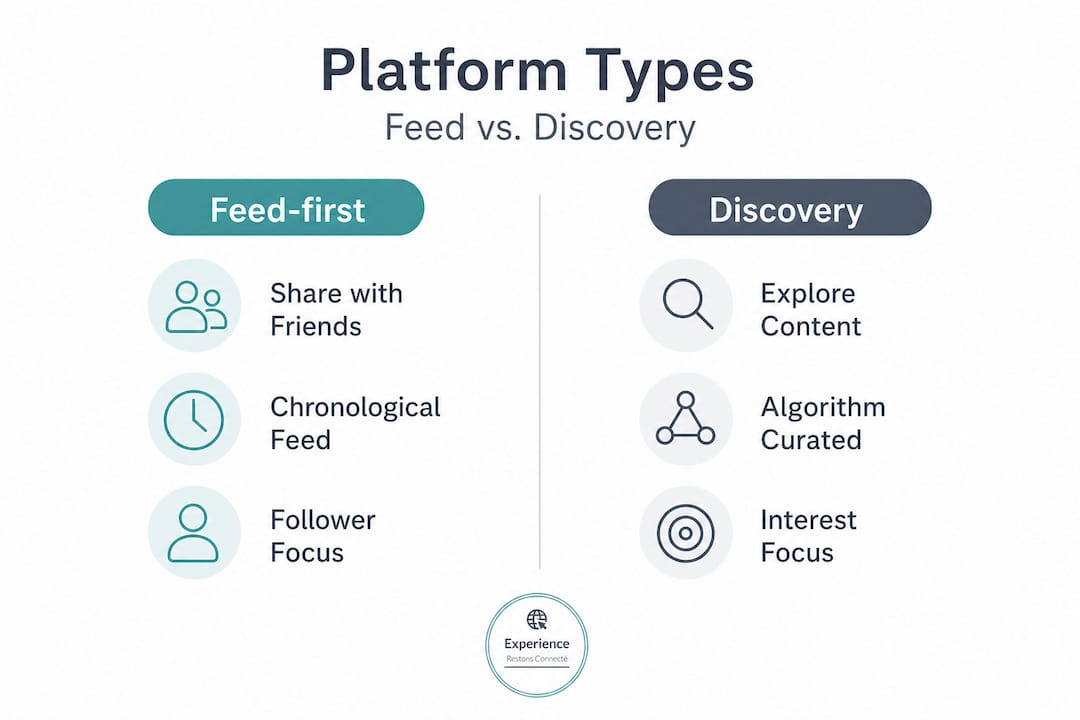
Here is a quick comparison:
| Feature | Feed-first platforms | Discovery platforms |
|---|---|---|
| Main use | Sharing with followers | Finding new content by interest |
| Content surfacing | Based on social connections | Based on search and interest signals |
| Community feel | Personal, intimate network | Broad, interest-based audiences |
| Typical interaction | Likes, comments, DMs | Saves, repins, collections |
| Best for | Personal sharing, storytelling | Inspiration, research, exploring |
The social feeds and algorithms powering each model are built differently too. Feed-first platforms prioritize recency and social proximity. You see what your friends just posted. Discovery platforms prioritize relevance to your stated or inferred interests. You see what matches what you have been looking at.
Here is how to decide which model suits your goals:
- Ask who you want to reach. If you want to stay connected with people you already know, a feed-first platform is right for you.
- Think about your content type. Aspirational or inspirational images work better on discovery platforms. Personal moments work better in social feeds.
- Consider your privacy comfort level. Feed-first platforms often let you keep a private profile. Discovery platforms are often more public by default.
- Look at the Instagram user experience as a benchmark. It is feed-first but has added discovery features over time, making it a useful reference point for understanding how the two models can overlap.
- Test before committing. Sign up, post a few photos, and see where your content lands naturally.
Pro Tip: If you are sharing European cultural content, a discovery-friendly platform can help your photos reach people who are genuinely interested in your region, culture, or tradition, even if they have never heard of you before.
A photographer social template can also help you present your photos consistently across both model types, which matters more than many beginners realize.
Why image sharing matters in Europe
With the platform models explained, it is essential to understand how Europeans specifically use images to share culture and build connections.
Europe is not one single culture. It is dozens of overlapping languages, traditions, cuisines, landscapes, and identities. That diversity makes image-based communication especially powerful. A photo of a traditional Finnish sauna, a Croatian coastal village, or a Portuguese ceramic tile says something that would take paragraphs to explain in words.
Mainstream photo-based platforms like Instagram and Pinterest represent a meaningful share of Europe's social media web traffic, indicating substantial demand for image-centric social and discovery experiences. These platforms are not niche tools in Europe. They are part of everyday digital life for millions of users.
| Platform | Main use case in Europe | Key demographic |
|---|---|---|
| Personal sharing, local culture, travel | 18 to 34 age group | |
| Inspiration, lifestyle, cultural discovery | 25 to 44 age group | |
| Smaller photo apps | Niche communities, regional identity | Varies widely |
Why do European users lean into image sharing so heavily?
- Language barriers are reduced. A photo works across 27 EU member languages.
- Cultural pride is visual. Regional festivals, food, and architecture are naturally photogenic.
- Travel culture is strong. Europeans travel across borders frequently, creating constant new visual content.
- Identity expression matters. Young Europeans use images to show who they are and where they come from.
- Community building is local. Shared images around regional events and traditions strengthen offline communities too.
"Photos are how you show the world what matters to you, not just what you think."
For anyone looking at free platforms for Europeans, image-first platforms consistently rank among the top choices because they are accessible, free to use, and immediately rewarding in terms of interaction. The barrier to entry is low. You do not need to be a professional photographer. You just need something worth sharing.
If you are thinking about building photo communities around a shared European interest, a photo-based platform gives you the right foundation. Visual consistency and regular posting are what build trust and followers over time.
Decentralized photo-based networks: Pixelfed and beyond
Alongside mainstream photo apps, decentralized image-sharing networks are opening new, user-driven possibilities worth knowing about.
Most photo-based networks are owned by large corporations. They set the rules. They control the algorithm. They decide what gets promoted and what gets buried. For users who find that uncomfortable, there is a growing alternative: decentralized photo-based networks.
Decentralized photo-based social networks like Pixelfed use open-source principles and federation, meaning no single company controls the entire platform. Pixelfed in particular runs on the ActivityPub protocol, the same open standard that powers Mastodon, allowing users across different servers to interact with each other. Think of it like email: you can have an account on one server and still communicate with people on a completely different one.
What makes decentralized platforms different from mainstream ones?
- No central algorithm. Content is shown chronologically, not ranked by engagement metrics designed to maximize advertising revenue.
- User-controlled data. You host your own instance or choose a trusted community server, giving you much more say over your data.
- Open governance. Features and moderation policies are often community-driven, not dictated by a corporate board.
- Federated community. You can connect with users across the wider fediverse, a network of interlinked open platforms.
- Privacy by design. Many decentralized platforms make privacy settings clearer and more user-friendly than mainstream alternatives.
Pro Tip: If you are privacy-conscious or frustrated with algorithmic feeds, try Pixelfed as a secondary platform. Post the same photos you would share elsewhere and see how the community dynamic feels without the engagement-optimization layer.
The interest in decentralized platforms is especially relevant in Europe, where data privacy regulations like GDPR set a higher standard. European users are often more aware of data rights, making decentralized networks a natural fit for those who want to stay in control.
When you are working on developing communities around European cultural content, decentralized platforms offer a quieter, more intentional space. There is less noise. The people who find you there are genuinely looking for what you post.
A strong visual presentation still matters on these platforms. A well-organized photographer portfolio template helps your profile look consistent and professional even without algorithmic boosting.
What most social users miss about photo-based networking
Having covered mainstream and decentralized networks, it is time for a candid perspective on what really matters when you use photo-based social apps.
Here is what gets overlooked: most users treat photo-based platforms as broadcast tools. They post, they wait for likes, they measure success by follower count. That approach misses the actual value these platforms offer.
Images communicate identity and emotion more directly than any other content format. A photo of your grandmother's kitchen in Lisbon, your neighborhood bakery in Lyon, or the view from your apartment window in Warsaw tells people who you are without a single word. That is not a small thing. It is one of the most honest forms of self-expression available online.
The real opportunity in photo-based networking is conversation. When a photo sparks a genuine comment, a shared memory, or a question that leads to a real exchange, that is when community actually forms. Metrics like likes are shallow signals. The depth of interaction around an image matters far more.
Algorithms are designed to push engagement, not connection. They optimize for the things that are easy to measure: clicks, watch time, shares. But a photo that makes someone feel recognized, curious, or nostalgic creates something more durable than a viral moment. It builds trust between you and an audience that genuinely cares about what you share.
Photo-based networks are at their best when you use them for authentic cultural sharing. This means sharing what is actually true to your experience, not what you think will perform well. Polished content gets attention. Real content builds community. The distinction matters, especially for users who want to connect across European cultures in a meaningful way.
If you are looking for alternative photo platforms that support more authentic community building, you will find that platforms designed around genuine sharing rather than viral growth tend to attract users with similar values.
Explore and connect: Next steps for image-sharing in Europe
Now that you are equipped with knowledge and insight, here is how to put it into action with platforms and resources tailored for European users.
If you are ready to start posting, sharing, and connecting through images, the right platform makes all the difference. You do not need to be everywhere at once. Pick one or two platforms that match your sharing style and audience, and build from there.
Experience.eu.com is built exactly for this purpose. It is a free, community-driven social network designed around sharing personal and cultural experiences through photos, with a European focus at its core. Whether you want to share a weekend trip, a local tradition, or everyday moments from your corner of Europe, this is your space. You can also explore options like Snapchat for more casual, real-time photo sharing, or learn how to grow your presence through social network affiliation. Browse the full European social network to find the community that fits you best, and register for free to get started.
Frequently asked questions
What makes photo-based social networks unique compared to text-based platforms?
Photo-based networks focus on sharing images as the main content, enabling users to connect visually and emotionally. As defined in the photo-sharing glossary, the core interactions revolve entirely around posting, viewing, and engaging with image content, which is fundamentally different from text-driven platforms.
Are photo-based platforms popular in Europe?
Yes, very. Instagram and Pinterest together account for a meaningful portion of social media web traffic across Europe, showing consistent and substantial demand for image-centric experiences among European users.
What is the main difference between feed-based and discovery photo platforms?
Feed-based platforms surface content from your social connections, while discovery platforms prioritize content based on your interests and search behavior. Both models serve different sharing goals and attract different types of users and content creators.
What is a decentralized photo-based network?
A decentralized photo-based network like Pixelfed runs on open protocols without corporate control, giving users more autonomy over their data, content visibility, and platform governance compared to mainstream image-sharing apps.