
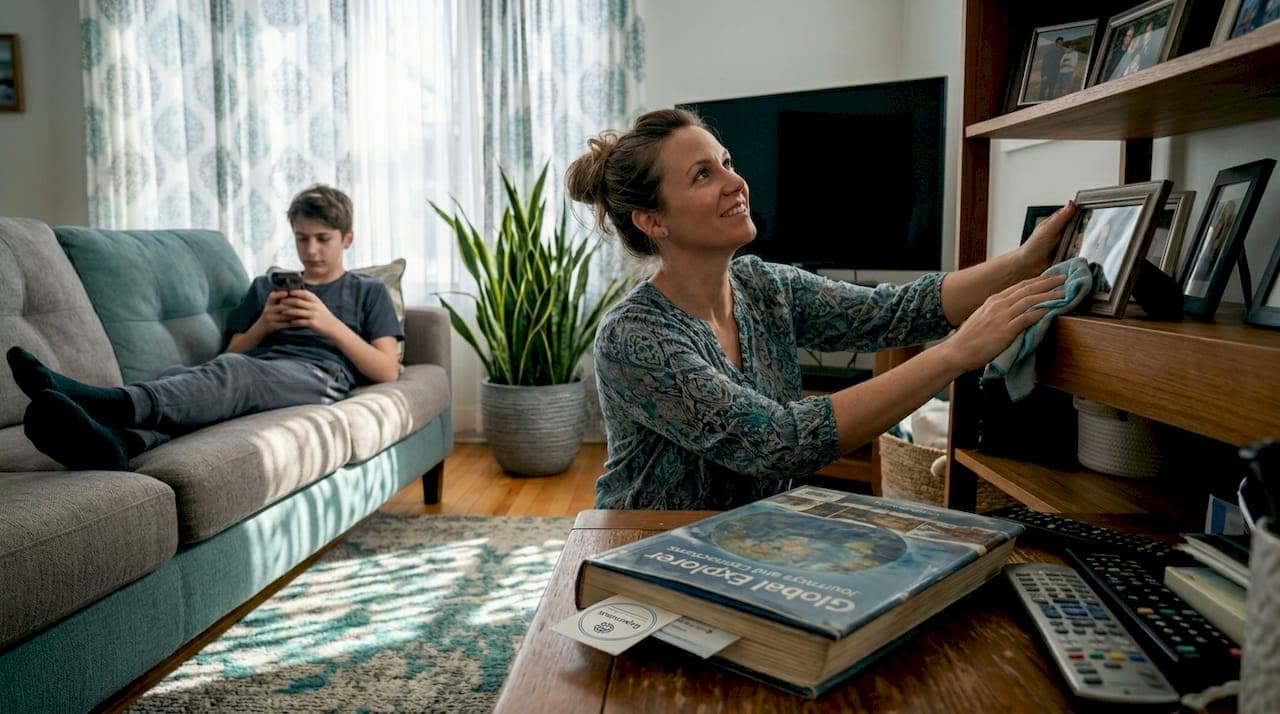
Posting a single photo online doesn't just share a moment with friends. Sharing photographs on social media can actually reshape how you remember your own experiences, sharpening some details while blurring others. For young adults across Europe who are using photo platforms to document travels, celebrate culture, and build community, this is a big deal. This article breaks down the real psychological and cultural power behind sharing photos online, and gives you practical tools to do it more thoughtfully and effectively.
Table of Contents
- What makes photography so powerful in social networks?
- Visual storytelling: How photos shape cultural and travel experiences
- The double-edged sword: Memory, influence, and mental health
- Maximizing impact: Best practices for thoughtful photo sharing
- What most guides miss: Why real connection beats perfection every time
- Ready to take your social photography to the next level?
- Frequently asked questions
Key Takeaways
| Point | Details |
|---|---|
| Photos shape memories | Sharing images on social networks changes both what you remember and how you relate to your experiences. |
| Visual stories drive travel | Your photos can inspire others’ trips and contribute to how places are seen online. |
| Authenticity wins engagement | Candid, real content typically outperforms heavily curated images in connecting with your audience. |
| Balance is vital | Staying mindful about mental health and resisting perfectionism makes photo sharing more enjoyable and meaningful. |
What makes photography so powerful in social networks?
Photography isn't just decoration on social media. It's the primary language. When you scroll through a feed, images stop you far faster than text ever could. A strong photo communicates mood, place, and personality in under a second. That kind of instant impact is why platforms built around visuals consistently outperform text-heavy alternatives in terms of engagement and community growth.
But the power of photography on social networks goes much deeper than aesthetics. Images help you build identity. When you post a photo from a weekend market in Lisbon or a rooftop in Budapest, you're not just sharing a pretty picture. You're telling people who you are, what you value, and where you belong. This is especially true for young adults who are still forming their sense of self and community. Photo-sharing becomes a way to signal belonging, find like-minded people, and feel seen.
There are several reasons why photography holds such a unique place in social networks:
- Instant emotional impact: Visuals trigger emotional responses faster than words, making them more shareable and memorable.
- Cross-language reach: A stunning photo of the Alps or a street food market in Marseille needs no translation. It works across every language barrier in Europe and beyond.
- Identity expression: Your photo feed functions as a visual autobiography, showing others your perspective and values.
- Community building: Shared visual themes, such as travel photography or food culture, create natural gathering points for people with common interests.
- Memory reinforcement: Posting a photo can actually help you remember specific details from an experience more vividly.
That last point is backed by research. Studies on photo sharing and memory show that sharing images online enhances recollection of photograph-related details, though the effects on broader memory are more complex. In short, what you photograph and share, you tend to remember more clearly.
"Photography on social media is not a passive act. It's a form of active memory construction, shaping both what you recall and how others perceive your experiences."
Understanding this dynamic changes how you think about every photo you post. It's worth learning how visual elements for better content can amplify your storytelling before you hit publish. And if you want to go further, exploring sharing photos for cultural connection gives you a richer picture of how community-driven photo sharing works across Europe.
Visual storytelling: How photos shape cultural and travel experiences
Now that you understand why photography is so powerful on social platforms, it's time to look at what it actually does to travel and cultural narratives. Every time someone posts a photo from a trip to Dubrovnik or a festival in Seville, they're contributing to a collective visual story about that place. These stories influence how millions of other people think about, plan for, and eventually experience those destinations.
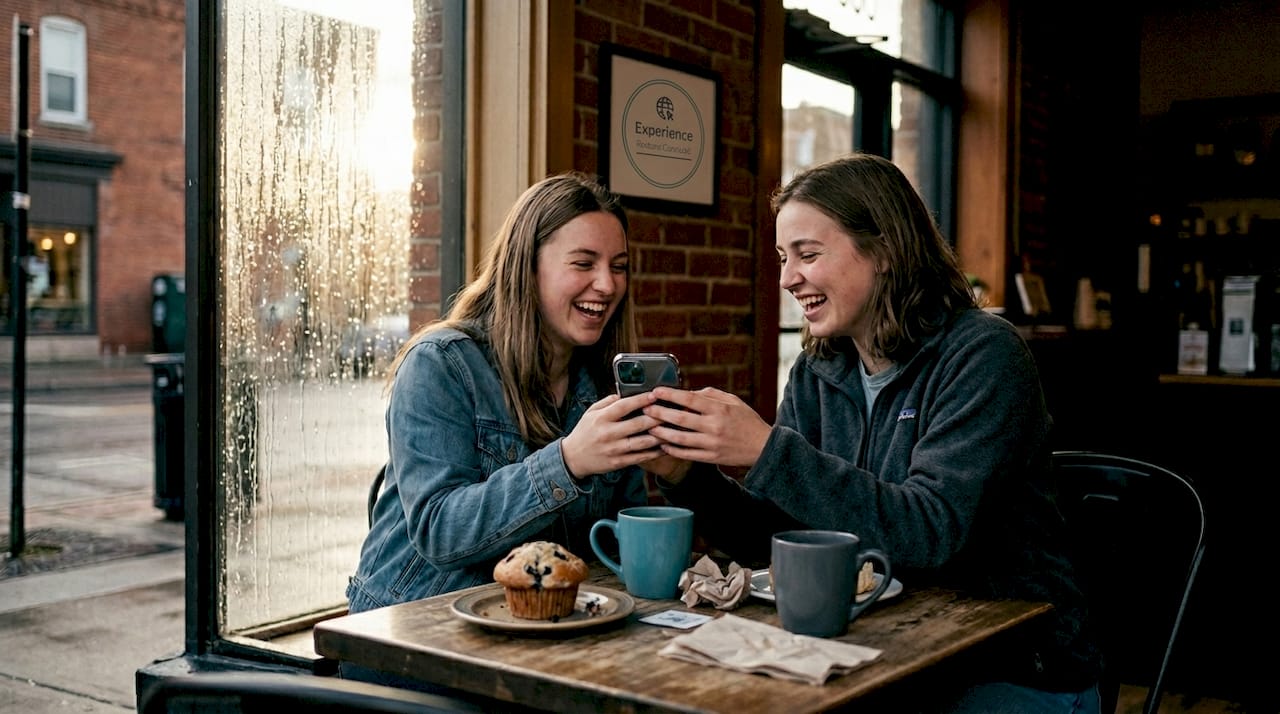
User-generated content, meaning photos and videos posted by everyday users rather than brands or tourism boards, plays a massive role in shaping destination image. Instagram and visual content directly influence how travelers perceive destinations and make decisions about where to go. When your photo of a hidden beach in Greece gets 400 likes, you're not just getting validation. You're shaping someone else's travel wishlist.
Different types of photo-driven narratives have different effects on viewers. Here's a quick comparison:
| Type of narrative | Platform effect | Viewer impact |
|---|---|---|
| Travel photography | Inspires wanderlust, shapes destination image | Influences travel planning and expectations |
| Food and culture | Celebrates local identity and diversity | Encourages culinary tourism and cultural curiosity |
| Events and festivals | Documents shared experiences in real time | Builds community and FOMO (fear of missing out) |
| Everyday life | Humanizes places and people | Builds relatability and trust |
So how do you actually craft posts that tell a real story rather than just showing a pretty picture? Here's a step-by-step approach:
- Start with context. Before you post, think about what makes this moment worth sharing. Is it the light? The people? The feeling of being somewhere new? Let that drive your caption.
- Choose one strong focal point. The best travel photos don't try to show everything. They zoom in on one detail, one face, one corner of a piazza.
- Write a caption that adds a layer. Don't just describe what's in the photo. Share something the viewer can't see, like how the market smelled or what surprised you about the city.
- Use location tags and relevant hashtags. This helps your photo reach people who are genuinely interested in that destination or culture.
- Engage with comments. When someone asks about a place you've posted, answer them. That interaction turns your photo into a conversation.
For more creative approaches, check out these unique Instagram post ideas that go beyond the usual tourist shot.
Pro Tip: Authenticity cues, things like natural lighting, candid moments, and minimal editing, consistently drive higher engagement than heavily filtered or staged shots. Viewers can tell the difference, and they respond more warmly to what feels real. Staying on top of storytelling trends for engagement can help you stay ahead of what resonates with audiences in 2026.
The double-edged sword: Memory, influence, and mental health
Visual storytelling on social media has real benefits, but it also comes with some genuine risks. Understanding both sides helps you use these platforms in a way that actually feels good, not just looks good.
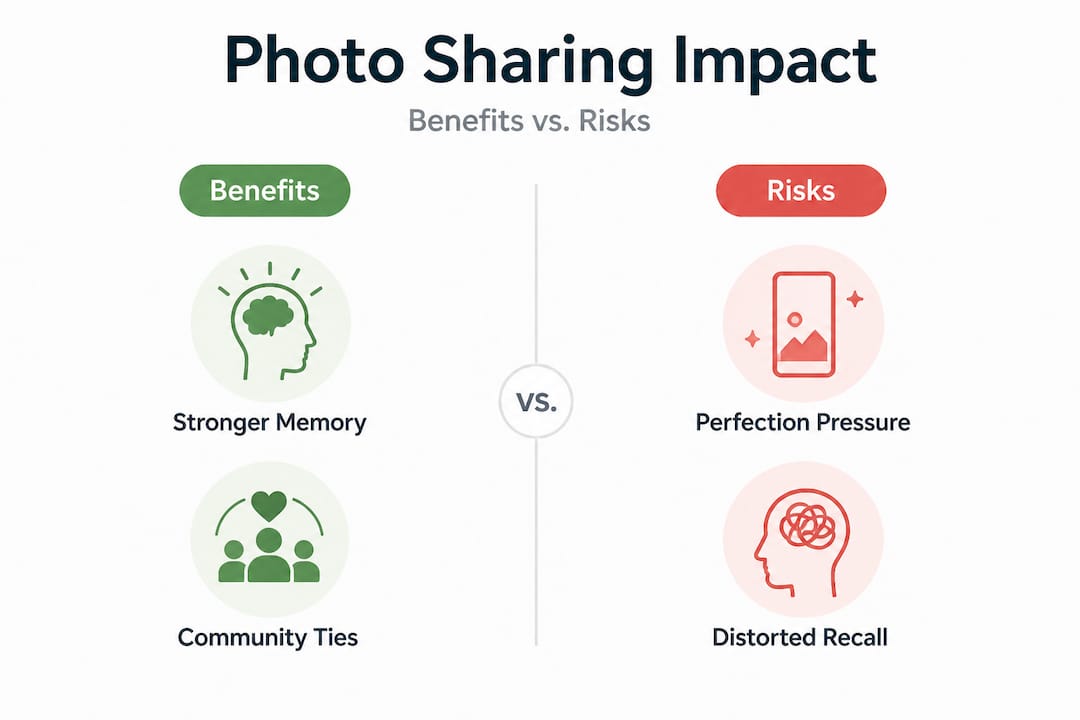
On the positive side, sharing photos strengthens memory and connection. When you document a trip and post it, you're more likely to remember the specific details of that experience. You're also creating a record that lets friends and family feel part of your journey, even from thousands of kilometers away. That kind of connection is genuinely valuable.
But here's where it gets complicated. The same research on photo sharing and memory that shows benefits also notes that audience awareness, meaning the fact that you know others will see your post, can change what you focus on and how you encode memories. You might remember the angle of a shot more vividly than the actual feeling of being there.
And then there's the mental health dimension. Research into Instagram use and FoMO in young adults highlights real links between heavy image-focused social media use and perfectionism, anxiety, and fear of missing out. FoMO is the feeling that everyone else is living a more exciting or fulfilling life than you are. It's fueled by curated, highlight-reel content that makes ordinary moments feel inadequate.
Here are some signs that your photo-sharing habits might be working against you:
- You feel anxious when a post doesn't get the engagement you expected.
- You spend more time editing and staging photos than actually enjoying the experience.
- You compare your feed to others and feel like yours doesn't measure up.
- You avoid sharing moments that feel "too ordinary" even if they were meaningful to you.
- You feel pressure to post constantly, even when you don't really want to.
Understanding how social media marketing shapes behavior can also help you recognize when platform design is nudging you toward habits that don't serve you. If you want to build a healthier relationship with your feed, learning how to boost Instagram engagement in a sustainable way is a good starting point.
Pro Tip: Break the perfection loop by deliberately posting one unfiltered, genuinely personal moment this week. Notice how it feels to share something real, and pay attention to how your audience actually responds. You might be surprised.
Maximizing impact: Best practices for thoughtful photo sharing
You've seen the opportunities and the pitfalls. Now let's talk about what actually works when you want to share photos that are both meaningful and effective on social media.
The key insight is this: authentic photo sharing influences how viewers evaluate and engage with your content. People don't just want to see beautiful images. They want to feel something real. Here's how to make that happen consistently:
- Lead with a story, not a scene. Instead of posting a photo of a cathedral, post the moment you stumbled upon it while lost in a new city. The story is what people connect with.
- Use natural light whenever possible. It's the single easiest upgrade to photo quality, and it signals authenticity to your audience.
- Write captions with a beginning, middle, and end. Even three sentences can tell a complete story. Start with what you saw, add what you felt, and close with something your viewer can take away.
- Batch your editing. Use consistent but light edits across your posts so your feed has a recognizable visual style without looking over-processed.
- Tag people and places thoughtfully. Tags expand your reach to communities that are genuinely interested in what you're sharing.
- Respond to every comment in the first hour. Early engagement signals to platform algorithms that your content is worth showing to more people.
- Revisit your Instagram bio optimization regularly. Your bio is the first thing new visitors see, and it should clearly communicate who you are and what you share.
Good captions and strong visuals work together, but the technical side matters too. Learning about boosting visuals for engagement gives you a solid foundation for making your images work harder across platforms.
Pro Tip: Post when your core audience is most active, typically Tuesday through Thursday between 9am and 11am in your local time zone. Use your platform's built-in analytics to confirm this for your specific followers, since every community is a little different.
What most guides miss: Why real connection beats perfection every time
Here's something most photography guides won't tell you: the relentless pursuit of a perfect feed is actually making your content less interesting, not more.
When everyone chases the same golden-hour shots, the same minimalist flat lays, and the same travel poses, everything starts to look identical. Algorithms may still reward it in the short term, but real people, your actual community, stop feeling anything when they see it. Sameness breeds indifference.
The accounts that build genuine, lasting communities are almost always the ones that share something real. A blurry photo from a spontaneous night out. A caption that admits the trip didn't go as planned. A behind-the-scenes moment that nobody else would have thought to post. These are the moments that make people stop scrolling and actually feel something.
This isn't just a feel-good theory. It's a pattern we see consistently across social platforms. Authenticity builds trust, and trust builds community. When your followers trust that what you share is real, they invest in your story. They come back. They tell their friends.
The pressure to appear flawless is real, especially for young adults navigating identity and self-presentation online. But that pressure is worth pushing back against. Start small. Share one post this week that you would normally have dismissed as "not good enough." See what happens. The insights from our team consistently point to the same conclusion: the posts that feel the most vulnerable are often the ones that resonate the most.
Perfection is easy to scroll past. Realness is hard to ignore.
Ready to take your social photography to the next level?
You now have a clear picture of how photography shapes memory, culture, and community on social media, and you have the tools to use it more thoughtfully. The next step is putting it into practice in a space that's built for exactly this kind of sharing.
At experience.eu.com, you can post your photos, connect with other Europeans who share your passion for travel and culture, and build a community around the moments that matter to you. Start by making sure your profile is working for you with our guide to optimize your Instagram bio, then explore everything available through our social network resources to get the most out of every post you share. Registration is free, and the community is waiting to see what you've captured.
Frequently asked questions
How does sharing photos on social media affect memory?
Sharing photos online can sharpen your recall of specific image details, but it may also shift your focus away from the broader sensory experience of the moment itself.
What are authenticity cues in photography?
Authenticity cues are subtle signals like candid framing, natural lighting, and minimal editing that help viewers read your content as genuine and trustworthy, which influences engagement more than polished production alone.
Can sharing travel photos help others decide where to go?
Yes. User-generated travel photos on platforms like Instagram directly shape how potential visitors perceive destinations and influence their travel planning decisions.
Is social media photography bad for mental health?
For some users, image-focused platforms are linked to perfectionism and FoMO, so building in breaks and prioritizing authentic sharing over performance can make a real difference to your well-being.