

You want to connect with people across Europe who love sharing photos, stories, and real cultural moments, but every platform you try feels either too big, too generic, or just not the right fit. That feeling is more common than you think. Finding an online community that actually matches your interests, values, and creative style takes more than a quick Google search. This guide walks you through every step, from getting your profile ready to posting your first photo and making genuine connections with people who share your passion for culture and visual storytelling.
Table of Contents
- What you'll need before joining an online community
- Step-by-step: How to find and join the right community
- Getting involved: Sharing content and making connections
- Troubleshooting and common mistakes to avoid
- Why joining online communities is more than just networking
- Ready to connect? Grow with the right community for you
- Frequently asked questions
Key Takeaways
| Point | Details |
|---|---|
| Preparation is key | Setting up your profile and understanding basic netiquette ensures a smooth start. |
| Find your best fit | Evaluate different communities based on interests, activity, and culture overlap. |
| Get involved actively | Sharing your content and participating in discussions leads to meaningful connections. |
| Avoid common mistakes | Protect your privacy, respect others, and don’t hesitate to move on if a group isn’t for you. |
| Communities drive growth | True connection and personal development happen when you engage authentically in shared spaces. |
What you'll need before joining an online community
Now that you understand the opportunities, let's outline what you'll need before you take your first step.
Before you sign up anywhere, it helps to get a few things in order. Jumping into a new community without preparation often leads to frustration. You post something, nobody responds, and you quietly disappear. That's not the experience you want. A little setup goes a long way.
Choose the right type of community first. Not all communities are built the same way. Some focus on travel photography, others on multicultural exchange, and others on creative storytelling. Think about what you actually want to share. Is it food from your region? Street photography from your city? Stories about festivals and traditions? Knowing this upfront saves you a lot of time.
Here's a quick checklist of what to prepare before joining:
- A clear, friendly profile photo (not a logo or blank avatar)
- A short bio that describes who you are and what you love to share
- A list of your top three interests or cultural passions
- Basic understanding of community rules and netiquette
- A decision on your privacy settings (public vs. private profile)
- At least three to five pieces of content ready to post
Your bio matters more than most people realize. Instagram bio setup tips can help you craft something that feels personal and inviting without oversharing. A good bio answers three questions: who you are, what you share, and why someone should follow you.
Pro Tip: Start with one or two communities rather than signing up for five at once. Spreading yourself too thin means you engage deeply with none of them. Pick your top choice, commit for a few weeks, and then expand.
Here's a simple comparison of what to prepare based on your goals:
| Your goal | Profile focus | Content to prepare |
|---|---|---|
| Share travel photos | Location-based bio | 5 travel images with captions |
| Cultural exchange | Mention your country and traditions | Photos of local events or food |
| Creative photography | Highlight your style | A small portfolio of your best shots |
| Meet European peers | Mention languages and interests | Casual, personal images |
According to beginner's social media affiliation tips for getting involved in online networks centered around the media industry, having a complete profile from day one dramatically increases your chances of getting responses and building early connections.
Step-by-step: How to find and join the right community
With your setup ready, it's time to discover and join the spaces that align with your passions.
Finding the right community isn't random. There's a clear process that works, and following it saves you from wasting time on spaces that don't fit.
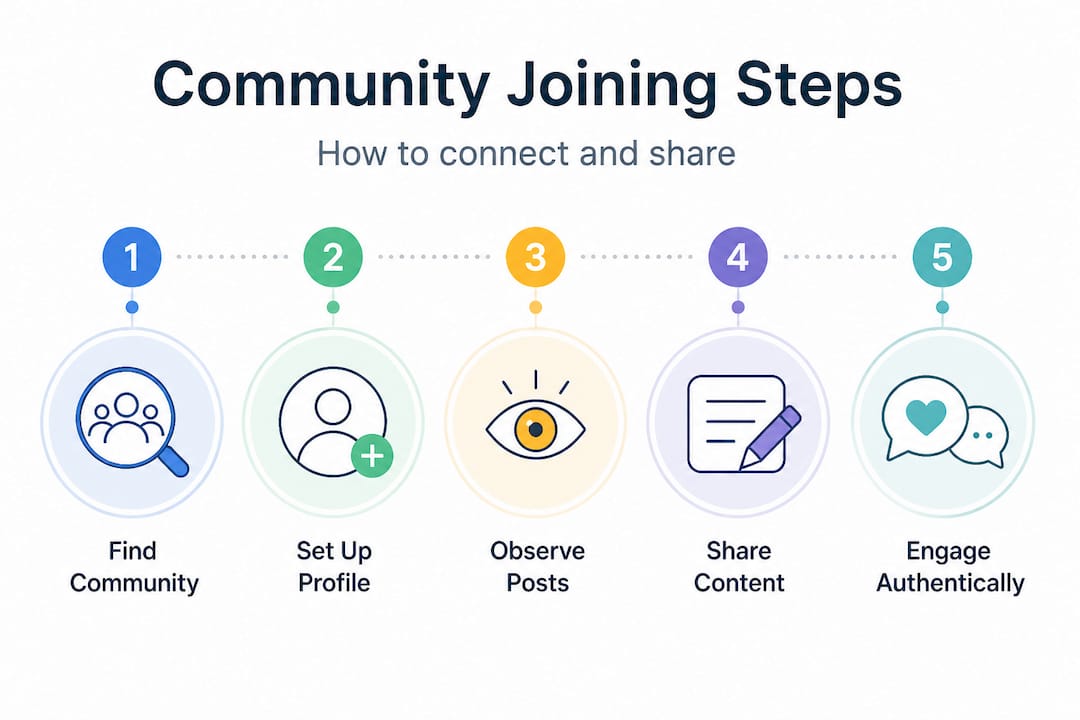
- Search with specific terms. Instead of searching "photo community," try "European cultural photography community" or "multicultural photo sharing forum." Specific searches return specific results.
- Browse social platforms for active groups. Facebook Groups, Reddit communities, and niche forums often have thousands of active members sharing exactly what you love.
- Check activity levels before committing. A community with 10,000 members but only two posts per week is basically inactive. Look for recent posts, comments, and replies.
- Read the community rules. Every good community has guidelines. Reading them tells you a lot about the culture and tone of the space.
- Sign up and complete your profile fully. Don't skip fields. A complete profile signals that you're a real person who's genuinely interested.
- Introduce yourself in the welcome thread. Most communities have one. Use it. Say who you are, where you're from, and what you love to share.
- Post your first piece of content within 48 hours. Waiting too long after joining means you lose momentum and the community forgets you were there.
Platforms for sharing media that are tailored for people in media and creative fields often have built-in tools to help new members get discovered quickly. Look for platforms that feature new members or have dedicated spaces for introductions.
Here's a comparison of popular community types for visual content and culture sharing:
| Community type | Best for | Engagement style | Example platforms |
|---|---|---|---|
| Photo-sharing networks | Visual storytellers | Likes, comments, collections | Niche photo sites, Instagram |
| Cultural forums | Deep discussion and exchange | Long-form posts, debates | Reddit, dedicated forums |
| Creative challenges | Skill building and visibility | Themed posts, voting | Challenge-based communities |
| European niche networks | Regional cultural connection | Photo posts, events | experience.eu.com |
| Multilingual communities | Cross-border exchange | Posts in multiple languages | Multilingual social platforms |
Pro Tip: After joining, spend your first session reading rather than posting. Get a feel for the tone, the type of content people share, and what gets the most engagement. Then craft your first post to match that energy.
For photo-sharing and cultural connection, the most successful new members are those who show up consistently in the first two weeks. That early activity signals to both the algorithm and the community members that you're worth following.
Getting involved: Sharing content and making connections
After joining, your next focus is on bringing your identity and experiences to life in the community.
Being a member is different from being an active member. Lurking is fine for a few days, but the real value of any community comes from what you put in. Here's how to do it well.
Share visual content that tells a story. A photo of a market in Lisbon hits differently when you add a caption about the smell of pastéis de nata and the sound of fado playing nearby. Context transforms a good image into a memorable post. Think about what your photo shows and what it feels like to be there.
Here are the best types of content to share when you're getting started:
- Photos from local festivals, markets, or cultural events
- Behind-the-scenes images of everyday life in your city or region
- Short video clips that capture movement and atmosphere
- Stories or captions that explain the cultural significance of what you're sharing
- Collaborative posts where you invite others to share their version of the same theme
Spark conversations, not just reactions. Instead of just posting and waiting, end your captions with a question. "Have you ever tried this dish?" or "What's the biggest festival in your city?" invites responses and builds real dialogue. Increasing engagement online consistently comes down to how well you invite others into the conversation.
Consistent engagement, even just a few times per week, builds more trust and visibility than posting every day for one week and then disappearing. Show up regularly, respond to comments, and support other members' content. That's how real community happens.
Be authentic. Communities built around cultural sharing are especially sensitive to content that feels performative or fake. Share what you actually love. Post the imperfect photo of your grandmother's kitchen. Write the honest caption about what it's like to celebrate a tradition far from home. That realness is what draws people in.
According to Social networking: share photos and build cultural connections, media content creators who use online communities for networking consistently report that authenticity and regular participation lead to stronger, longer-lasting connections than any other strategy.
Pro Tip: Join or organize a themed challenge within your community. For example, a "Sunday street photography" challenge or a "traditional food from my region" week. Challenges create shared momentum and give you a reason to post even when inspiration is low. Building your community through collaborative projects is one of the fastest ways to go from new member to recognized contributor.
Troubleshooting and common mistakes to avoid
Even the most welcoming communities have challenges; here's how to handle common roadblocks and thrive.
Most people who give up on online communities do so because of avoidable mistakes. Knowing what these are ahead of time puts you in a much stronger position.
Common pitfalls to watch out for:
- Lurking too long without posting. If you wait more than a week to contribute, you miss the window when your new member status gives you extra visibility.
- Ignoring community rules. Posting promotional content in a non-promotional space, or using the wrong hashtags, can get your posts removed or your account flagged.
- Oversharing personal data. Sharing your home address, phone number, or daily schedule publicly is a serious safety risk. Keep personal details private.
- Posting inconsistently. Posting 10 times in one day and then nothing for three weeks confuses the algorithm and your followers.
- Not engaging with others. If you only post and never comment on anyone else's content, you'll struggle to build real connections.
Solutions that actually work:
- Start with three posts per week and build from there
- Read the community FAQ before posting anything
- Message a moderator if you're unsure about the rules
- Use platform privacy settings to control who sees your content
- Respond to every comment you receive in your first month
Joining networked communities with a clear strategy, as outlined in guides for getting involved in online networks centered around the media industry, means you avoid the most common beginner mistakes and start building real connections faster.
Pro Tip: Never share your email address, phone number, or location details in public posts or comments. Use the platform's private messaging system for any personal exchanges, and always check a platform's privacy policy before signing up.
How to leave a community gracefully. Not every community will be the right fit, and that's okay. If you've given it a genuine effort for three to four weeks and still don't feel at home, it's better to move on than to stay disengaged. You don't need to announce your departure. Simply stop posting, unfollow, and redirect your energy to a community that feels right. There's no shame in it. Finding the right space sometimes takes a few tries.
Why joining online communities is more than just networking
Stepping back, it's clear that joining online communities offers deeper rewards than just social media metrics.
Most advice about online communities focuses on growth tactics: how to get more followers, how to increase your reach, how to go viral. That framing misses something important. The real value of these spaces isn't measured in follower counts. It's measured in the conversations that change how you see the world.
When you share a photo of your city's oldest neighborhood and someone from another country says "this reminds me of my grandmother's village," something real happens. That's not networking. That's empathy. That's the kind of connection that stays with you.
Cultural sharing communities, especially those built around visual content, are uniquely powerful because images bypass language barriers in ways that text alone cannot. A well-composed photo of a traditional ceremony, a street market, or a family meal communicates something universal. It invites people in. It says: this is my world, and I want you to see it.
The conventional advice says to treat online communities as tools for building your personal brand. We'd push back on that. When you approach a community as a place to grow your brand, you optimize for performance. When you approach it as a place to genuinely share and learn, you optimize for connection. The second approach almost always produces better long-term results, including better reach, because people can tell the difference.
Sustained participation in the right community also builds real skills: visual storytelling, cross-cultural communication, writing, and the ability to give and receive feedback. These aren't soft benefits. They're transferable skills that show up in your work, your relationships, and your confidence. Long-term community growth happens when you treat your participation as a practice, not a campaign.
The communities that matter most are the ones where you feel seen, not just followed. Seek those out. Stay in them. Contribute honestly. That's where the real experience lives.
Ready to connect? Grow with the right community for you
If you've made it this far, you're already ahead of most people who want to join a cultural sharing community but never take the first step. The guidance above gives you everything you need to get started with confidence.
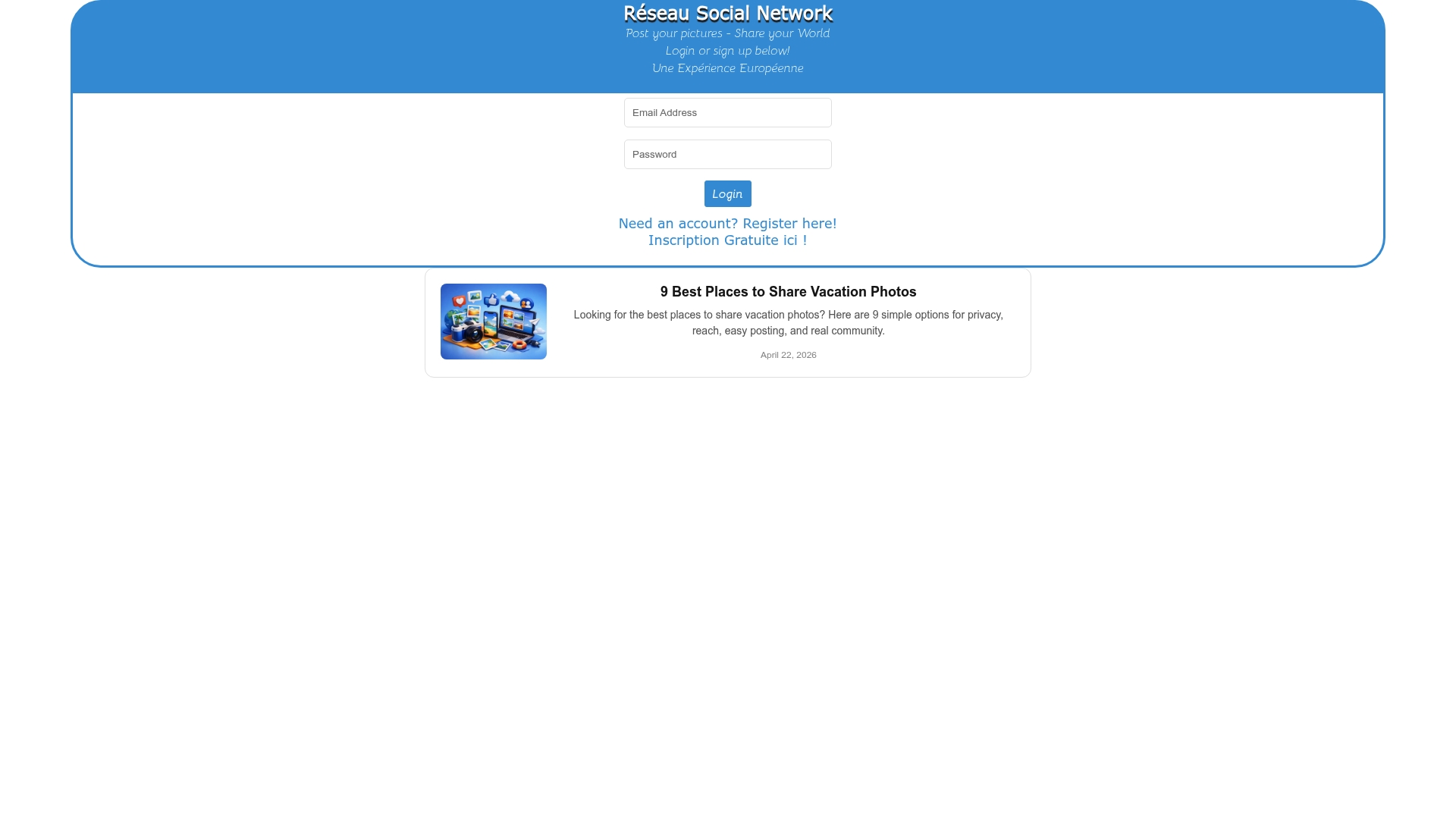
At experience.eu.com, you can find a social network built specifically around European cultural experiences and photo sharing. Registration is free, the community is active, and the focus is exactly what this guide has been about: real people sharing real moments. You can also explore tools to help you create visual content that stands out and tells your story effectively. Don't wait for the perfect moment. Sign up, post your first photo, and say hello. The community is ready for you.
Frequently asked questions
What are the best online communities for sharing cultural photography?
Platforms focused on visual storytelling and multicultural exchange, like those with active photo-sharing and discussion forums, are ideal for sharing cultural photography. Look for communities with strong moderation and regular themed events, as described in resources on freelance social media for media-focused networks.
How can I find communities that match my specific cultural interests?
Use search engines, hashtags, and specialized network directories to discover communities aligned with your cultural passions. Resources on social networking and cultural connections can help you identify the most active and relevant spaces for your interests.
What should I include in my community profile?
Include a clear photo, an engaging bio focused on your interests, and any links to your creative work to help others connect with you. Guides on affiliation reseaux sociaux debutant offer detailed tips for getting involved in online networks centered around the media industry.
How do I stay safe while sharing in online communities?
Protect your privacy by not sharing personal information publicly and using platform privacy controls. The affiliation reseaux sociaux debutant guide covers essential safety practices for getting involved in online networks centered around the media industry.
What if I don't feel welcome in a new online community?
If a community doesn't feel like the right fit, it's okay to leave and try another that better matches your values and interests. Resources on developper communaute explore options for media professionals to connect in online spaces that genuinely suit them.